


9 celebrities who saw themselves in fictional characters — and spoke out
9 celebrities who saw themselves in fictional characters — and spoke out

Jami GanzSat, September 12, 2026 at 1:35 PM UTC
0
Scarlett Johansson in 2025; Diana Ross, circa 1967; Justin Baldoni in 2024Credit: Kevin Mazur/Getty; Michael Ochs Archives/Getty; Araya Doheny/Variety via Getty
Art imitates life imitates...
In summer 2026, word started to spread that the movie star at the center of Rachel Cusk’s new novel, Life of M, appeared to draw heavily from the life and career of Natalie Portman, who had previously met Cusk, praised her writing, and promoted her work through her book club. While Cusk has resisted confirming the connection and Portman herself has not publicly addressed it, sources close to the actress have denied that she had any involvement in the book. Life of M is hardly the first time a seemingly fictional character has closely resembled a real-world figure.
Still, as Cusk recently put it to The New York Times, while skirting the question of M’s real-life parallels: “Famous people enter the public imagination... it is part of fame’s deal, and part of its tragedy.”
Here are nine instances in which a celebrity has seen themselves reflected in a fictional character — and weighed in. Many of them didn’t bother holding back.
Anna Wintour on The Devil Wears Prada’s Miranda Priestly
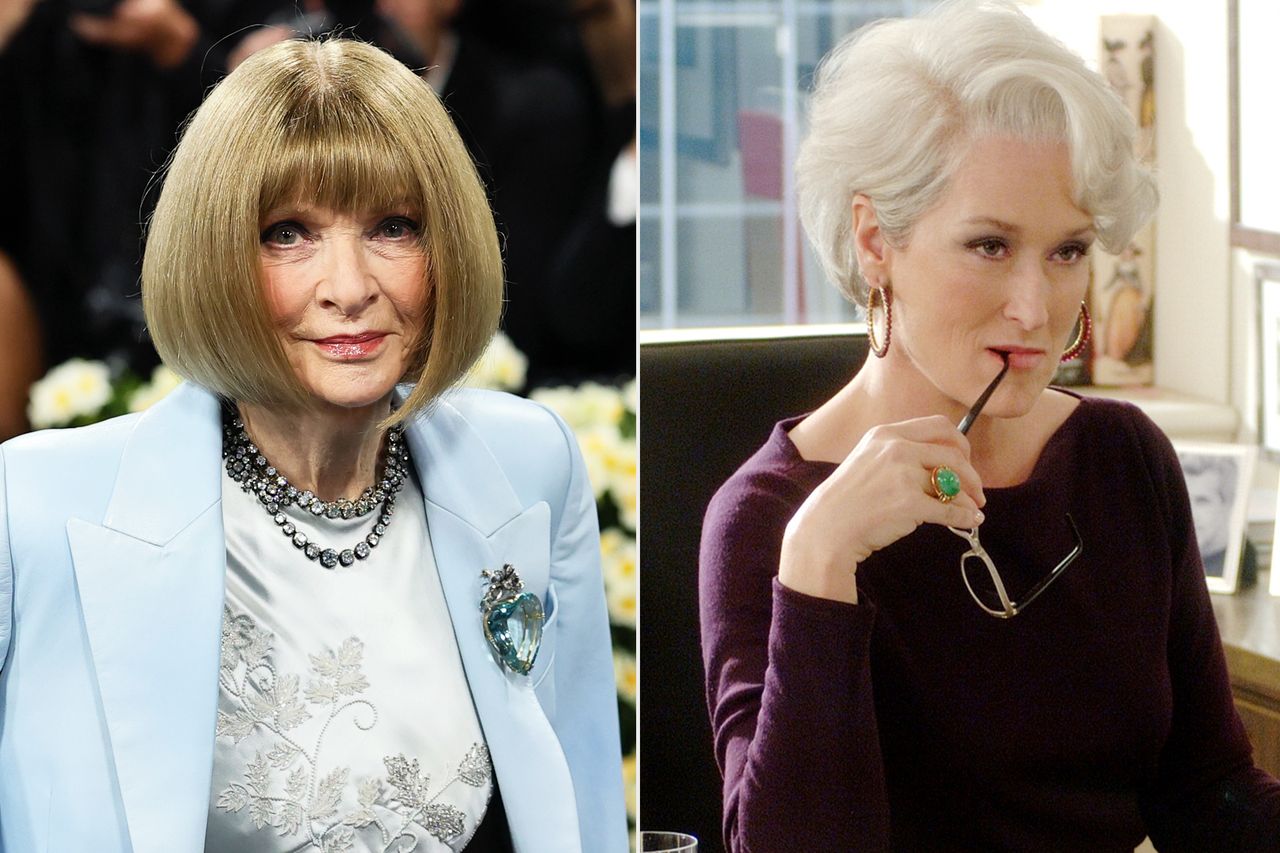
Anna Wintour at the 2025 Met Gala; Meryl Streep in ‘The Devil Wears Prada’Credit: Theo Wargo/FilmMagic; 20th Century Fox
There was never much question that Anna Wintour was a direct inspiration for Miranda Priestly, the fearsome editor of fictional fashion bible Runway in former Vogue assistant Lauren Weisberger’s roman à clef, The Devil Wears Prada. With her severe bob and icy demeanor, Miranda chills her underlings to the bone. The book was adapted into the 2006 big-screen modern classic of the same name, featuring an Oscar-nominated turn from (surprise, surprise) Meryl Streep as Miranda. Anne Hathaway and Emily Blunt star as Miranda’s assistants, aspiring journalist Andy Sachs and Runway disciple Emily Charlton, respectively.
During a September 2025 appearance on The New YorkerRadio Hour, Wintour recalled attending the premiere “having no idea what the film was going to be about. And I think that the fashion industry were very... very sweetly concerned for me about the film, that it was gonna paint me in some kind of difficult light, but—”
“Cartoonish,” The New Yorker editor David Remnick chimed in, to which Wintour replied, “Yes. A caricature.”
“First of all, it was Meryl Streep, which, fantastic,” Wintour continued. “Then I went to see the film and I found it highly enjoyable and very funny. So [Prada head designer] Miuccia [Prada] and I talk about it [laughs] a lot. And I say to her, ‘Well, it was really good for you.’ And you can imagine what she says back.”
Later, Wintour added, “It had a lot of humor to it. It had a lot of wit. It had Meryl Streep. I mean, it was Emily Blunt. I mean, they’re all amazing. And in the end, I thought it was a fair shot.”
Justin Baldoni on Deadpool & Wolverine’s Nicepool
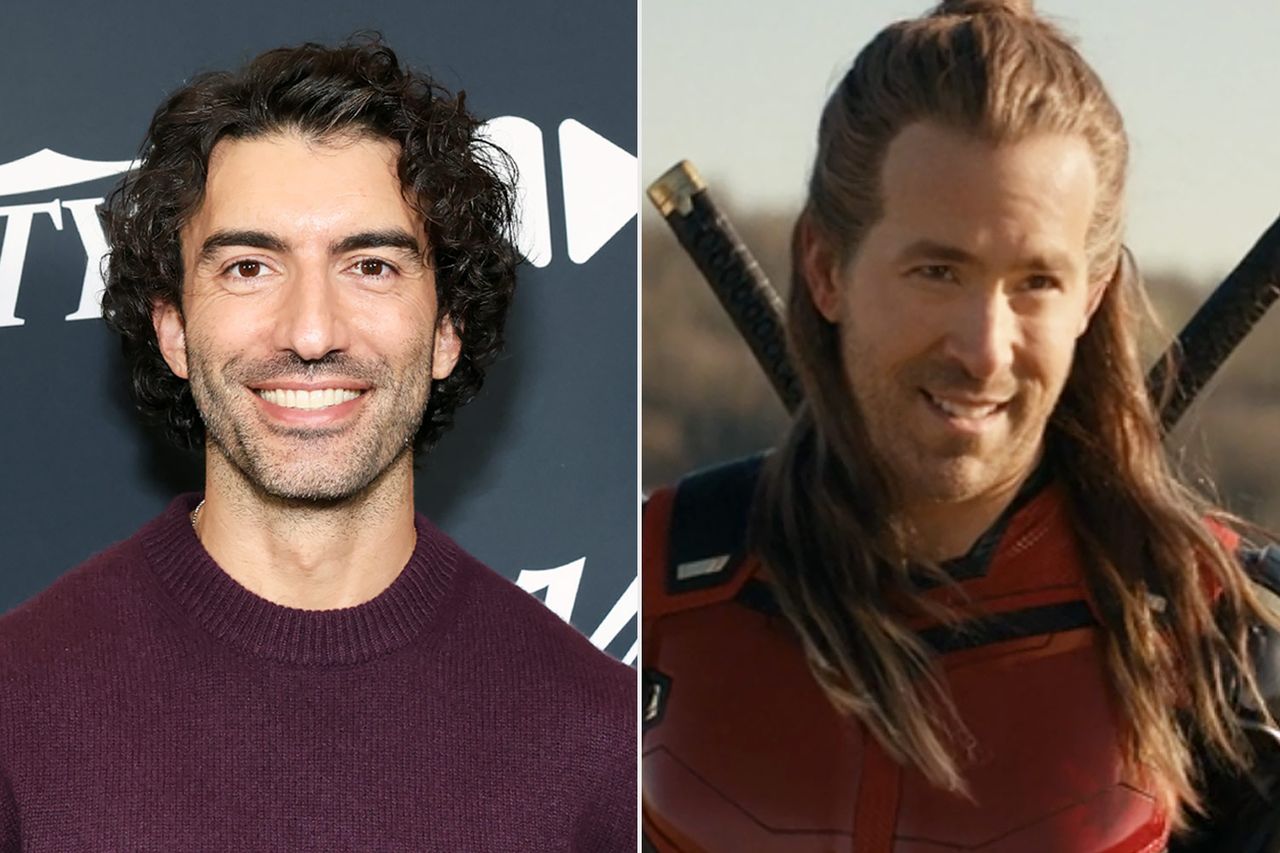
Justin Baldoni; Ryan Reynolds as Nicepool in ‘Deadpool & Wolverine’Credit: Araya Doheny/Variety via Getty; Disney/Marvel
In the weeks after Blake Lively alleged in a December 2024 CRD complaint and subsequent lawsuit that she had suffered sexual harassment and been targeted by a smear campaign orchestrated by her It Ends With Us director and costar Justin Baldoni, he denied her claims and filed a $400 million defamation countersuit.
Baldoni alleged in his amended complaint that Deadpool & Wolverine’s Nicepool — an alternate version of Deadpool also played by Ryan Reynolds — was the couple’s way of “mocking and bullying Baldoni.”
“Reynolds portrayed Nicepool as a vicious caricature of a ‘woke’ feminist before concluding the character’s arc with his violent shooting death at the hands of ‘Ladypool,’ a character voiced by Blake Lively,” read the complaint. The 224-page filing was dismissed in 2025, though it remains available on Lawsuit Info, a website created by Baldoni’s camp amid the highly publicized legal battle.
A settlement was ultimately reached in May 2026, averting a trial scheduled to begin in New York City later that month. In the ensuing months, Baldoni’s Wayfarer Studios was ordered to pay more than $171,000 to The New York Times to cover legal fees stemming from its failed defamation claim over the newspaper’s December 2024 exposé publicizing Lively’s allegations. In August 2026, Baldoni and Wayfarer were ordered to pay Lively roughly $407,000 in attorneys’ fees and costs related to their dismissed defamation claim against the Gossip Girl star.
Scarlett Johansson on La première chose qu’on regarde (The First Thing We Look At)
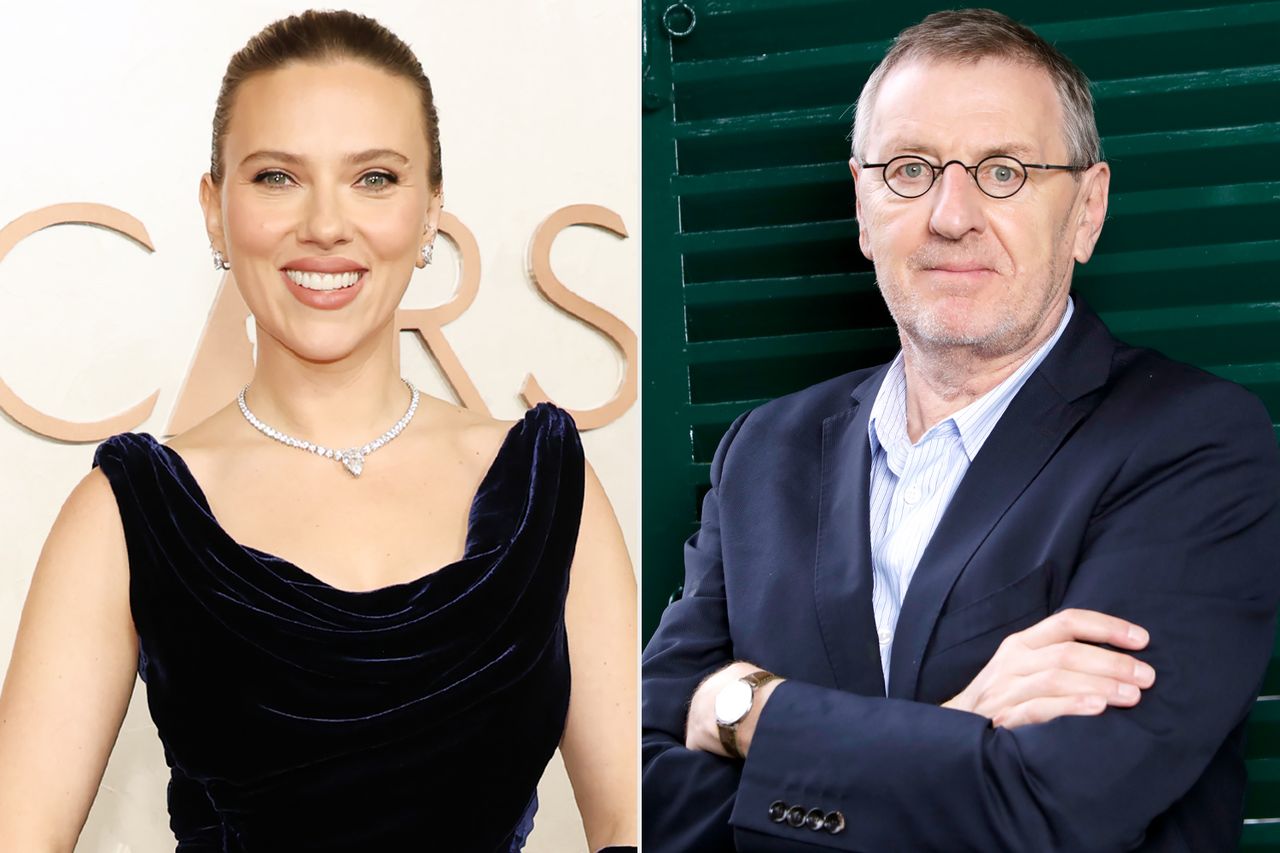
Scarlett Johansson; Grégoire DelacourtCredit: Kevin Mazur/Getty; Eric Fougere/Corbis via Getty
Grégoire Delacourt’s 2013 novel, La première chose qu’on regarde, or The First Thing You See, name-checks the Lost in Translation star in the text.
“On September 15, 2010, Arthur Dreyfuss, wearing a Smurf-print tank top and boxer shorts, was watching an episode of The Sopranos when there was a knock at his door. Facing him was Scarlett Johansson. He was twenty years old and a mechanic. She was twenty-six, and something was wrong,” reads publisher JC Lattès’ description of the book, which it bills as “an ultra-modern fable... about the birth of love and the truth of souls.”
The fictional Johansson is — spoiler alert — not Johansson at all, but a French model who bears a striking resemblance to the Marvel star.
Still, in 2013, the future two-time Oscar nominee took Delacourt and his publisher to court, seeking the equivalent of roughly $68,000.
Her lawyer described the work as a “violation and fraudulent and illegal exploitation of her name, her reputation and her image,” and said it contained “defamatory claims about her private life.”
In 2014, a French judge ruled partly in Johansson’s favor, awarding the Avengers star an estimated $3,400 after determining that references to two purported affairs were defamatory. The judge, however, rejected her claim that the novel amounted to fraudulent exploitation of her name and image and declined to ban translations or film adaptations of the book.
Diana Ross on Dreamgirls
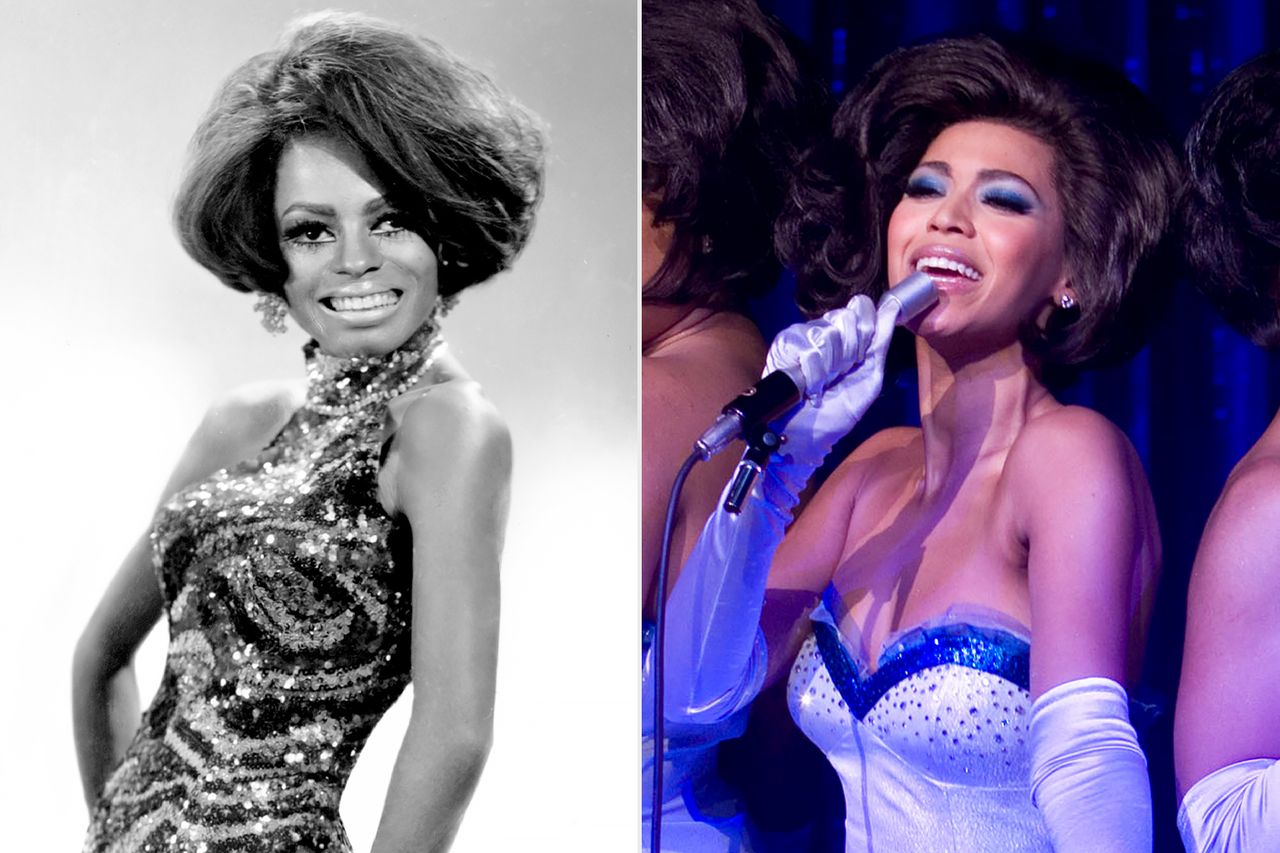
Diana Ross; Beyoncé in ‘Dreamgirls’Credit: Michael Ochs Archives/Getty; David James
Both the 2006 film Dreamgirls and the 1981 Broadway musical on which it was based are understood to have been inspired, at least in part, by the Supremes.
Still, Diana Ross quipped during an early 2007 appearance on Good Morning America, “Maybe I should go see it with my lawyer.” The former Supremes frontwoman then said she’d “only heard what everybody else says, that it’s very much my image and likeness.”
“If I’ve had an opportunity to influence any of these beautiful, talented young people, then I’m excited about it,” the 13-time Grammy nominee said. Ross’ remarks were made just over a month before the film took home two Oscars: Best Supporting Actress for Jennifer Hudson and Best Sound Mixing.
Just before the Academy Awards, Dreamworks and Paramount insisted in an ad that the character of Curtis Taylor Jr., played by Jamie Foxx, was not actually meant to be a fictionalized version of Motown founder Berry Gordy Jr.
In 2008, Smokey Robinson told Vanity Fair he’d “protested Dreamgirls to the hilt.”
“They’re not going to take our legacy and make it something negative [for] kids who didn’t grow up with Motown,” said Robinson, the original vice president of the pioneering record label. “To make people think this is Motown and make Berry a gangster, no, they’re not going to get away with that s---.”
Frank Sinatra (allegedly) on The Godfather’s Johnny Fontane
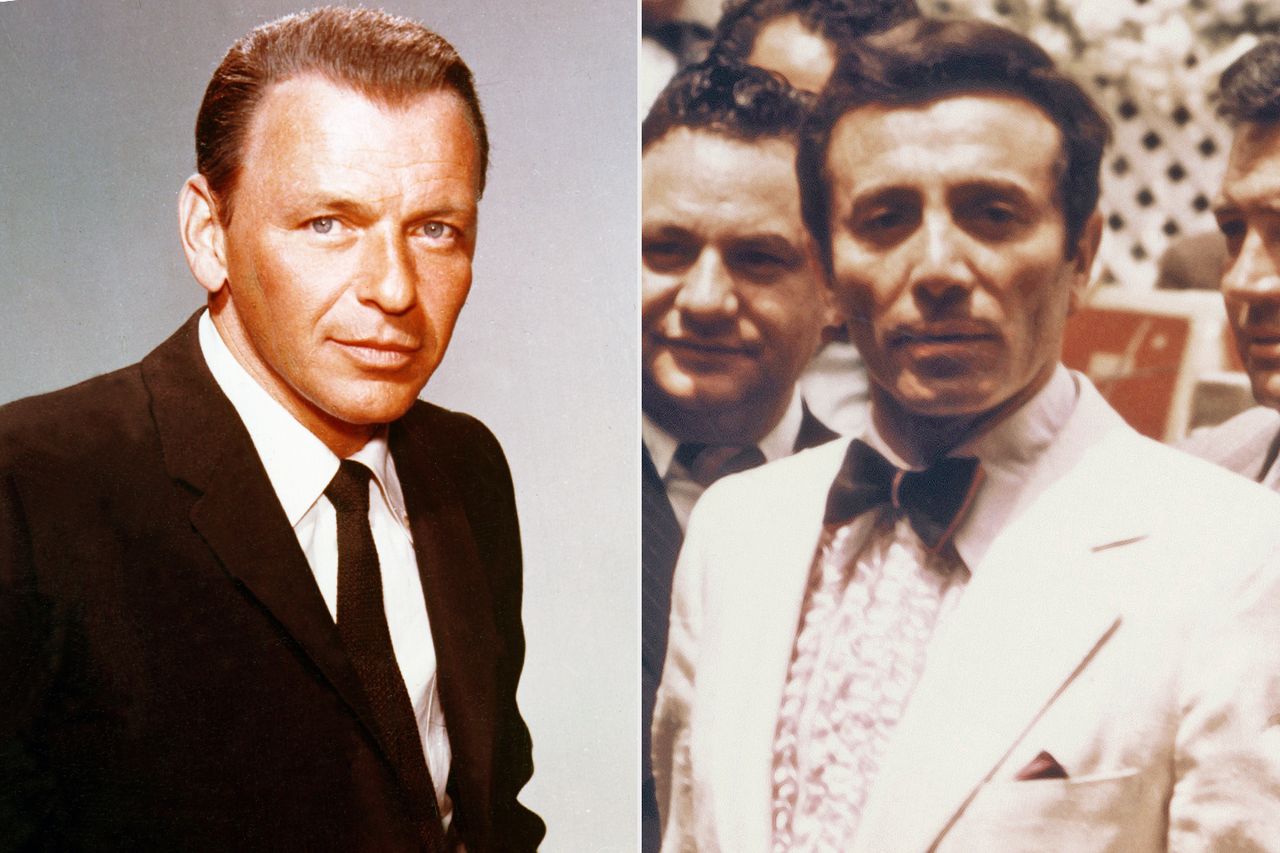
Frank Sinatra; Al Martino in ‘The Godfather’Credit: Michael Ochs Archives/Getty; Screen Archives/Getty
Mario Puzo, who authored The Godfather and cowrote the film adaptation with director Francis Ford Coppola, once recounted in New York Magazinethat Ol’ Blue Eyes declined to make his acquaintance, apparently due to Johnny Fontane.
The fictional crooner, played by Al Martino in the film, was “obviously... inspired by a kind of Frank Sinatra character,” Coppola would later say in the director’s commentary, per The Hollywood Reporter.
“‘I don’t want to meet him,’ Sinatra said,” Puzo wrote in 1972, months after The Godfather hit theaters. “I said to Sinatra, ‘Listen, it wasn’t my idea.’ ... He completely misunderstood. He thought I was apologizing for the character of Johnny Fontane in my book. He said, and his voice was almost kind, ‘Who told you to put that in the book, your publisher?’ I was completely dumbfounded. I don’t let publishers put commas in my books. That’s the only thing I have character about. Finally I said, ‘I mean about being introduced to you.’”
Puzo went on to claim that Sinatra, whose ubiquitous voice he elsewhere described as “soft and velvety,” began “to shout abuse. ... He did not use foul language at all. The worst thing he called me was a pimp, which rather flattered me.” Sinatra, according to Puzo, also said that “if it wasn’t that I was so much older than he, he would beat hell out of me. I was a kid when he was singing at the Paramount, but OK, he looked twenty years younger.”
Advertisement
“Sinatra kept up his abuse and I kept staring at him. He kept staring down at his plate. Yelling. He never looked up. Finally I walked away and out of the restaurant. My humiliation must have showed on my face because he yelled after me, ‘Choke. Go ahead and choke,’” wrote Puzo, who shared the Oscar for Best Adapted Screenplay with Coppola. The pair would reunite for the Best Picture-winning Part II as well as Part III.
Amanda Knox on Stillwater
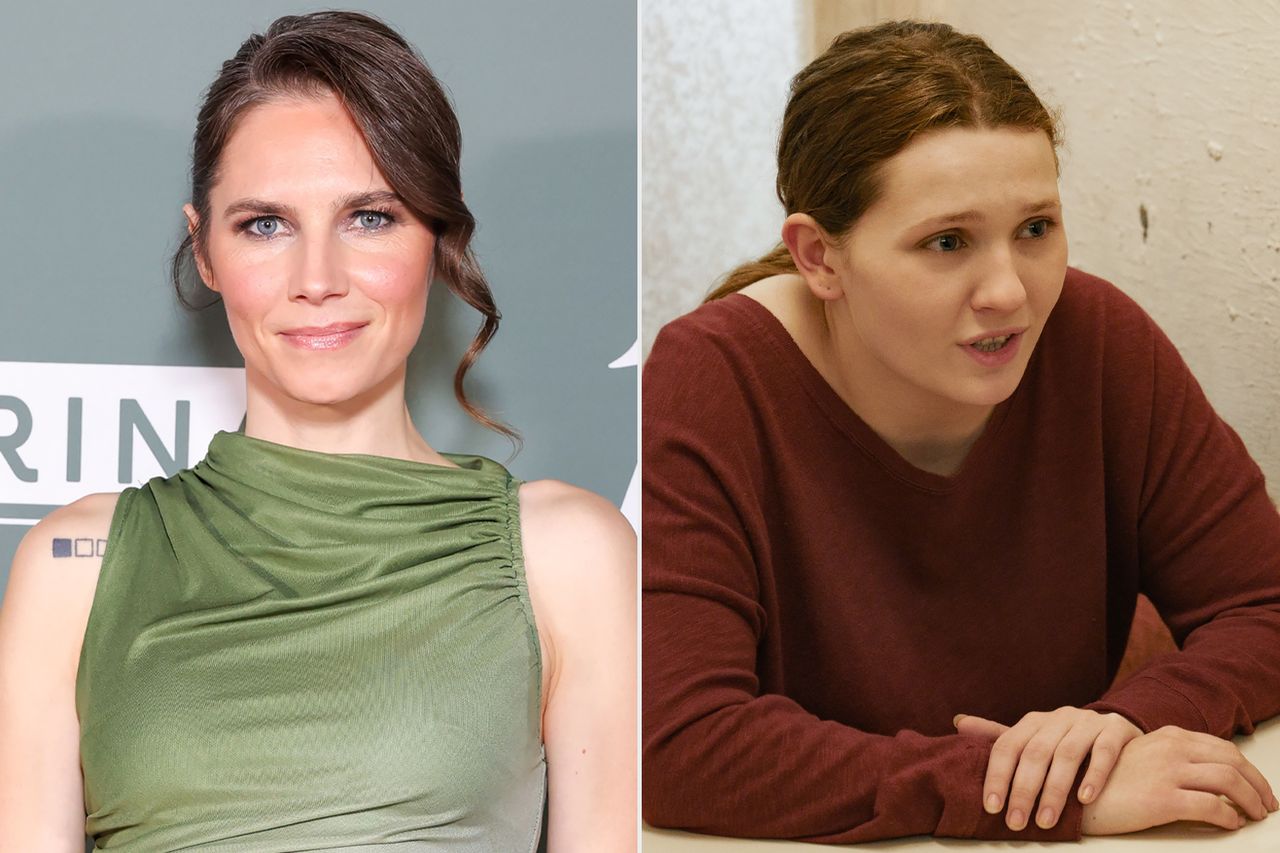
Amanda Knox; Abigail Breslin in ‘Stillwater’Credit: Stefanie Keenan/Variety via Getty; Jessica Forde/Focus Features
Stillwater, the Matt Damon thriller about an Oklahoma father trying to clear the name of his estranged daughter (Abigail Breslin), imprisoned in France for the murder of a friend she insists she didn’t kill, didn’t exactly make waves at the box office.
But it did strike a nerve with Amanda Knox, whose name became synonymous with her own experience as an American student wrongly convicted and imprisoned in Europe for the 2007 murder of Meredith Kercher, Knox’s flatmate while studying in Italy.
Knox was infamously dragged over the coals by the international media and found guilty in 2009, along with former flame Raffaele Sollecito. Their convictions were overturned two years later, at which point Knox returned to her native Seattle.
She and Sollecito were then retried and convicted again in early 2014. Just over a year later, both convictions were overturned. In 2019, Italy was ordered to pay Knox more than $20,000 in damages and legal costs over rights violations during her initial questioning. Knox had no affiliation with Stillwater, even as the film rode the coattails of her case.
“This new film by director Tom McCarthy, starring Matt Damon, is ‘loosely based’ or ‘directly inspired by’ the ‘Amanda Knox saga,’ as Vanity Fair put it in a for-profit article promoting a for-profit film, neither of which I am affiliated with. I want to pause right here on that phrase: ‘the Amanda Knox saga.’ What does that refer to?” she asked in an essay on Medium. “Does it refer to anything that I did? No. It refers to the events that resulted from the murder of Meredith Kercher by a burglar named Rudy Guede. It refers to the shoddy police work, prosecutorial tunnel vision, and refusal to admit their mistakes that led the Italian authorities to wrongfully convict me, twice.”
Knox, who reiterated that she “had near-zero agency” over “those four years of wrongful imprisonment and 8 years of trial,” requested that people “understand that how you talk about it affects the people involved: Meredith’s family, my family, Raffaele Sollecito, and me.”
Though Knox said Stillwater was “by no means the first thing to rip off my story without my consent at the expense of my reputation,” she called out McCarthy for telling Vanity Fair that he “‘couldn’t help but imagine how it would feel to be in Knox’s shoes.’ ...but that didn’t inspire him to ask me how it felt to be in my shoes.”
Knox also pushed back against the filmmaker saying he’d hoped to “fictionalize everything” around the circumstances of her case, save for the ingredients: “an American woman studying abroad involved in some kind of sensational crime and she ends up in jail.”
Get your daily dose of entertainment news, celebrity updates, and what to watch with our EW Dispatch newsletter.
“That story, my story, is not about an American woman studying abroad ‘involved in some kind of sensational crime.’ It’s about an American woman NOT involved in a sensational crime, and yet wrongfully convicted,” Knox wrote. “If you’re going to ‘leave the Amanda Knox case behind,’ and ‘fictionalize everything around it,’ maybe don’t use my name to promote it.”
“All this I mostly forgive. I get it. There’s money to be made, and you have no obligation to approach me,” said Knox, who was “more bothered” by the ways in which the story deviated from reality.
“By fictionalizing away my innocence, my total lack of involvement, by erasing the role of the authorities in my wrongful conviction, McCarthy reinforces an image of me as a guilty and untrustworthy person ... that is sure to leave plenty of viewers wondering, ‘Maybe the real-life Amanda was involved somehow,’” Knox wrote.
Sofia Coppola on Her and Spike Jonze on Lost in Translation
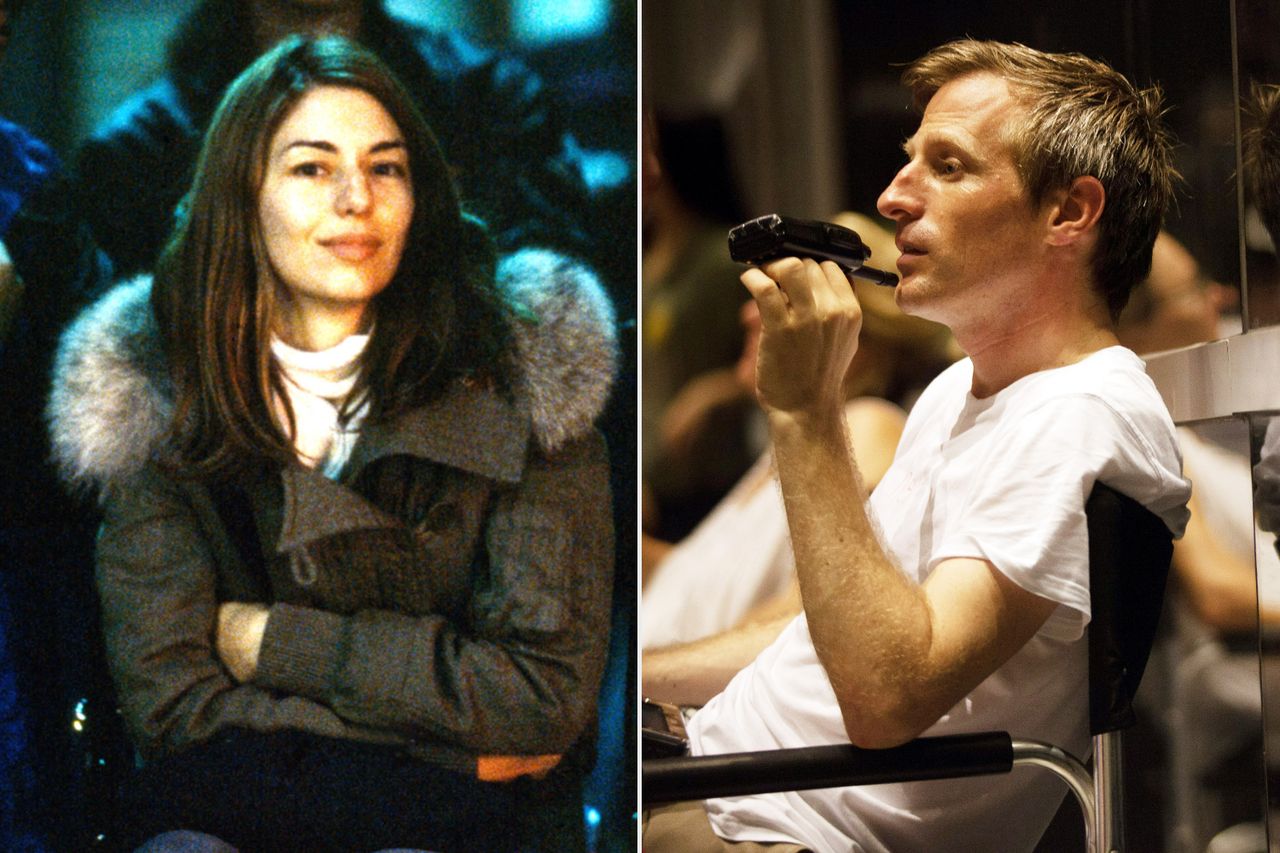
Sofia Coppola directing ‘Lost in Translation’ in 2003; Spike Jonze directing ‘Her’ in 2013Credit: Focus Features/Courtesy Everett Collection; Sam Zhu/Warner Bros. Pictures/Courtesy Everett Collection
While Spike Jonze has never confirmed that his 2013 film Her was intended as a response to Lost in Translation, the Oscar-winning 2003 feature written and directed by his ex-wife Sofia Coppola was partially inspired by the dissolution of their marriage. Director Michel Gondry, meanwhile, “scolded” Coppola at the film’s premiere in defense of his friend Jonze.
“He apologized to me about that,” Coppola told Variety in 2023. “I think he was being a good friend. He thought he was defending Spike, but he was putting me down at my premiere. It came out of him trying to be a good friend to Spike.”
The understated drama stars Scarlett Johansson as a young, rudderless college graduate accompanying her photographer husband (Giovanni Ribisi) on a trip to Tokyo, where his attentions are diverted to a blonde starlet (Anna Faris). His wife, meanwhile, finds herself drawn to Bill Murray’s fading movie star.
Jonze’s Her hit theaters a decade later and starred Joaquin Phoenix as a writer navigating the end of his marriage who finds connection with an AI operating system (voiced, conveniently, by Johansson). Prescient, huh?
Much like Coppola, Jonze won Best Original Screenplay for the film.
“I never saw it!” Coppola told Variety. “From the trailer, it looks the same too.”
“We have the same production designer,” she explained. “But I haven’t seen it. I know people really like that movie, but I haven’t seen it. I don’t know if I want to see Rooney Mara as me [laughs].”
William Randolph Hearst and Citizen Kane
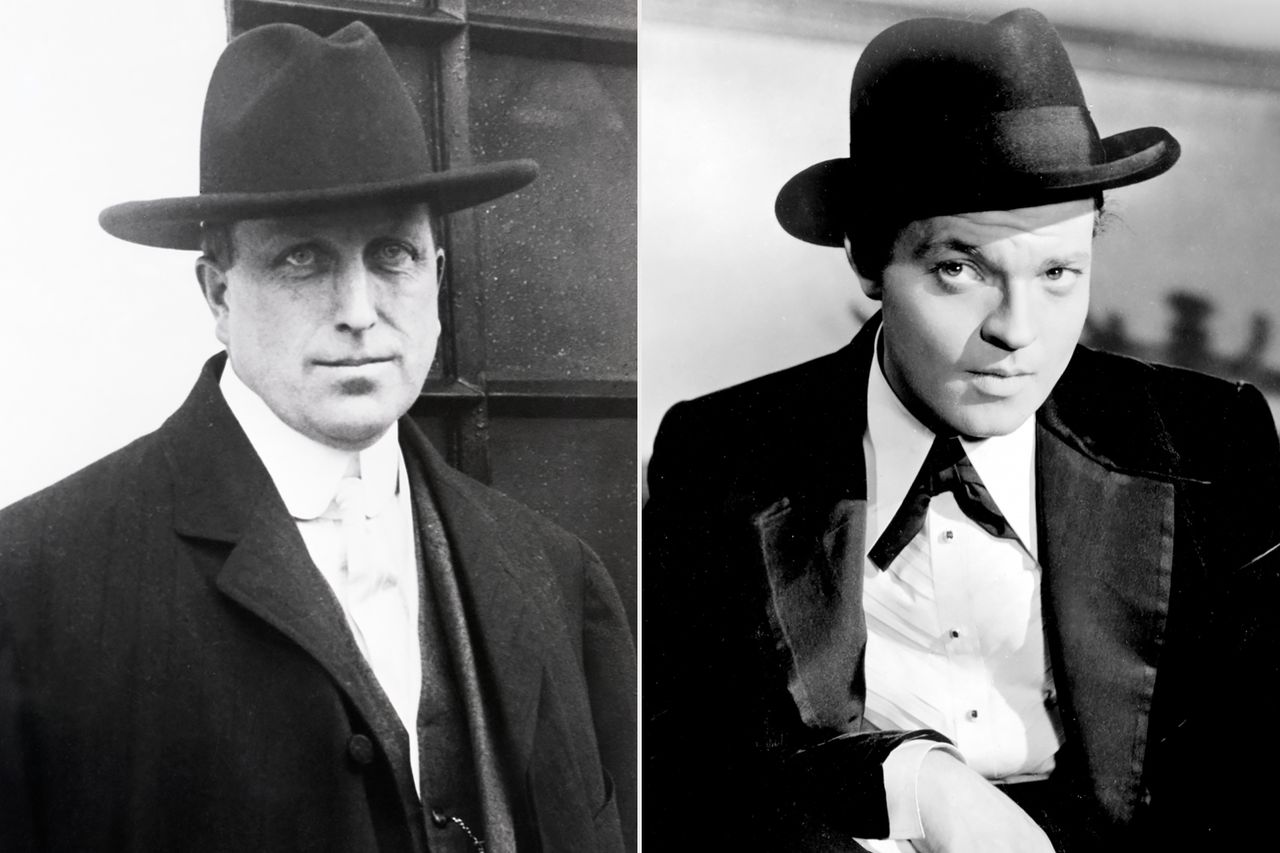
William Randolph Hearst; Orson WellesCredit: Bettmann Archive; Courtesy Everett
Though it’s long been cemented in the annals of great American cinema, Orson Welles’ Best Picture-nominated Citizen Kane made an enemy of William Randolph Hearst, the real-life publishing magnate who served as the primary inspiration for its fictional protagonist. Welles, who cowrote the film, starred as the titular Charles Foster Kane.
Hearst did what he could to put the kibosh on the 1941 film — which took home Best Original Screenplay, the only one of its nine Oscar nominations that resulted in a win — once he got wind of its parallels to his life, courtesy of gossipmonger Hedda Hopper.
Though Hearst never publicly afforded the film any airtime, he and those in his corner employed threats of blackmail, newspaper smears, and other pressure tactics in an effort to suppress it, while his publications attacked Welles’ private life.
According to PBS, Welles later admitted that he had “anticipated the trouble from Hearst” over the film’s character of Susan Alexander, who was partly inspired by Hearst’s longtime companion and mistress, actress Marion Davies. One theory surrounding the film’s famous “Rosebud” motif links it to Hearst’s love of flowers, while another, much-disputed story claims that the word was Hearst’s intimate nickname for Davies.
Welles acknowledged that what the film “did to her” amounted to “something of a dirty trick.”
Still, the irony of Hearst’s reaction to the film is that, according to Douglas Fairbanks Jr., Hearst once told his father that he prioritized newspapers over movies “because you can crush a man with journalism, and you can’t with motion pictures.”
Hearst’s grandson, William Randolph Hearst III, broke rank with his family at the 60th San Francisco International Film Festival in 2017, where he praised Citizen Kane as “just a great movie, a great story” as well as “quite accurate in the way it portrays the newspaper business.”
“It’s not meant to be a documentary,” said the younger Hearst, who was 2 years old when his grandfather died.
Growing up, he said, the film “was a forbidden subject,” one he didn’t watch for himself until college: “The performances and the writing are very good. It’s always amazing to me that Orson had this obvious gift.”
on Entertainment Weekly
Source: “AOL Entertainment”
