


Burnham is oblivious to the looming oil shock
Burnham is oblivious to the looming oil shock

Liam HalliganSun, July 26, 2026 at 5:30 AM UTC
0
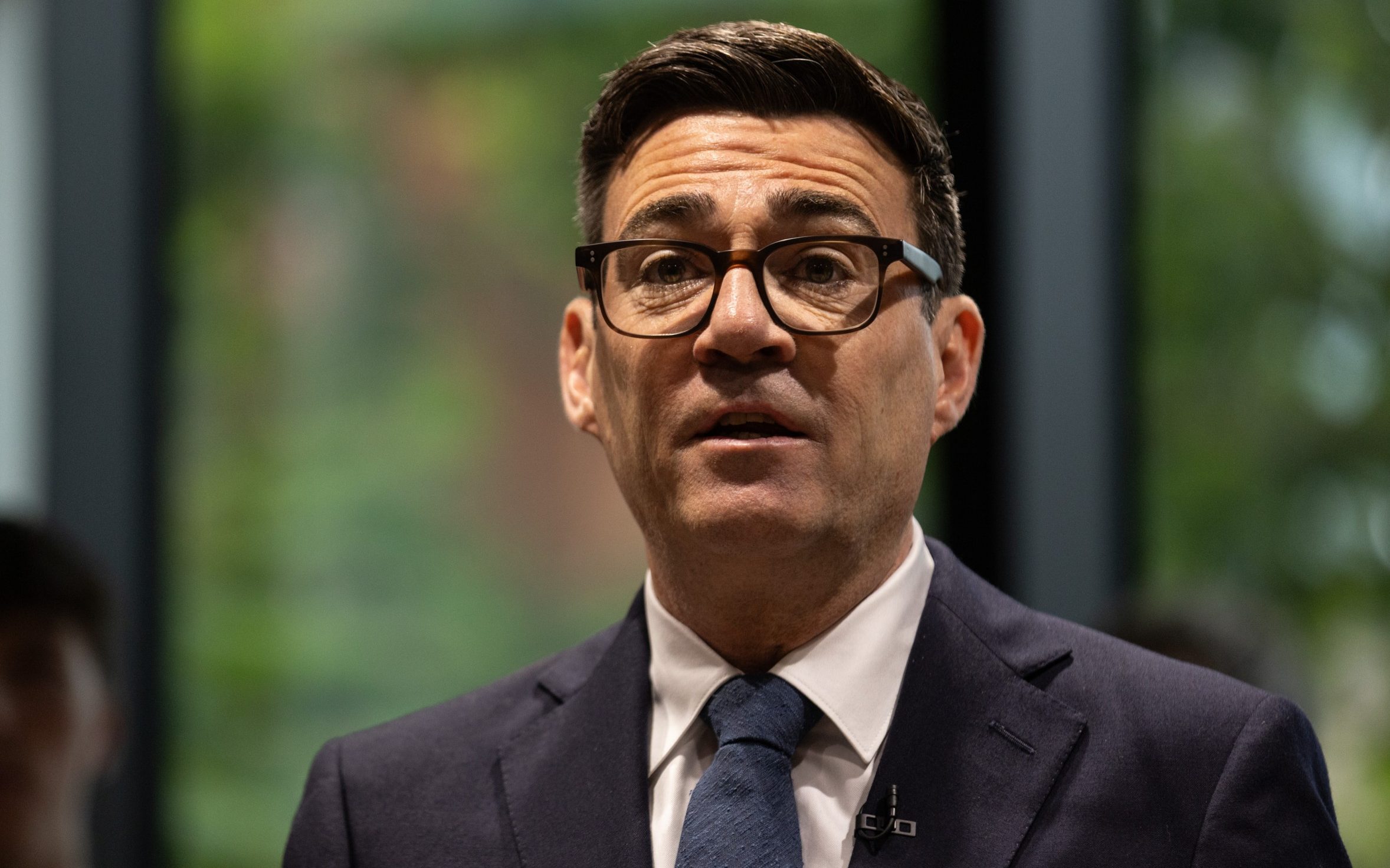
Andy Burnham’s new government looks oblivious to the reality of an energy price shock - James Speakman/WPA
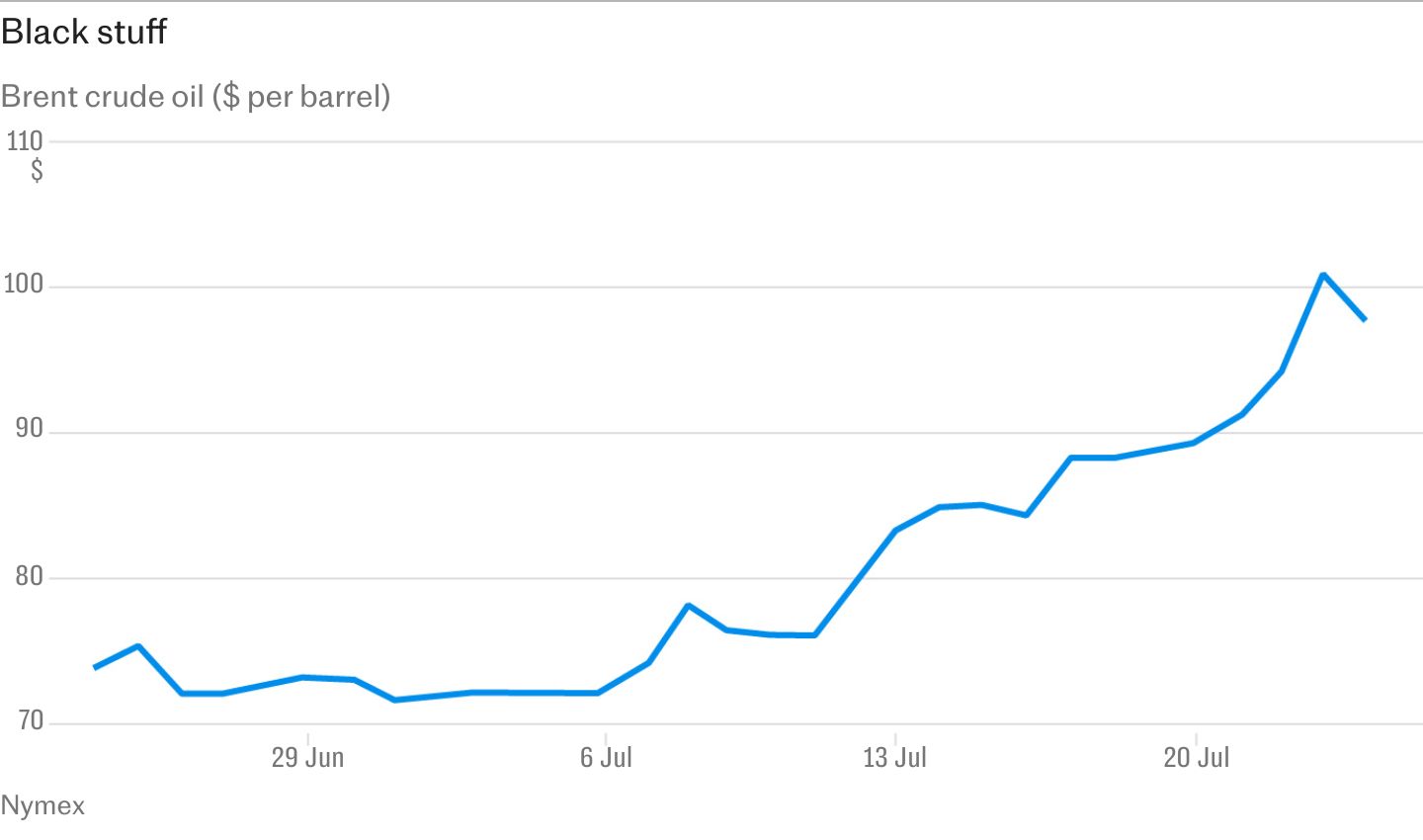
Brent crude last week topped $100 per barrel. Oil is up from just $71 in early July – a staggering 40pc price surge in less than a month.
For weeks, financial commentators have tried to wish away escalating missile exchanges between the US and Iran, yearning for a lasting Middle Eastern ceasefire.
But while the oil price pulled back slightly at the end of last week, crude remained close to triple digits. And with Washington and Tehran increasingly at loggerheads, and less than a tenth of pre-war crude supplies passing through the Strait of Hormuz, oil could well go higher again next week.
We’re now in the midst of the most severe structural energy crisis since the 1973 Yom Kippur war. Andy Burnham’s new government looks oblivious to that reality.
Within the first few days of taking office last Monday, the new Prime Minister said he would “use the flexibility within the fiscal rules”, raising further fears this is going to be an administration to the Left of Keir Starmer’s, with even higher levels of borrowing and spending.
Burnham floated the idea of raising the personal tax threshold from £12,570 – where it has been frozen since 2021 and is set to remain until the end of this decade – before dropping the idea a day later. Financial markets gained the strong impression the UK’s seventh Prime Minister in a decade is making up his plan to steer Britain’s public finances away from the fiscal cliff edge as he goes along.
As a US-Iran ceasefire came into view in early June, oil dropped from $95 to around $70 a barrel within a few weeks. With the prospect of the Persian Gulf reopening, there was talk of lower energy prices, falling inflation and a resumption of interest rate cuts by the Bank of England.
But with that ceasefire non-existent – certainly on hold – oil prices have again risen sharply, pulling even harder on the Government’s already tightly-stretched fiscal arithmetic. As a significant energy importer, the UK faces expensive oil, which feeds directly into inflation, putting upward pressure on sovereign borrowing costs, which, for almost two years, have been easily the highest in the G7.
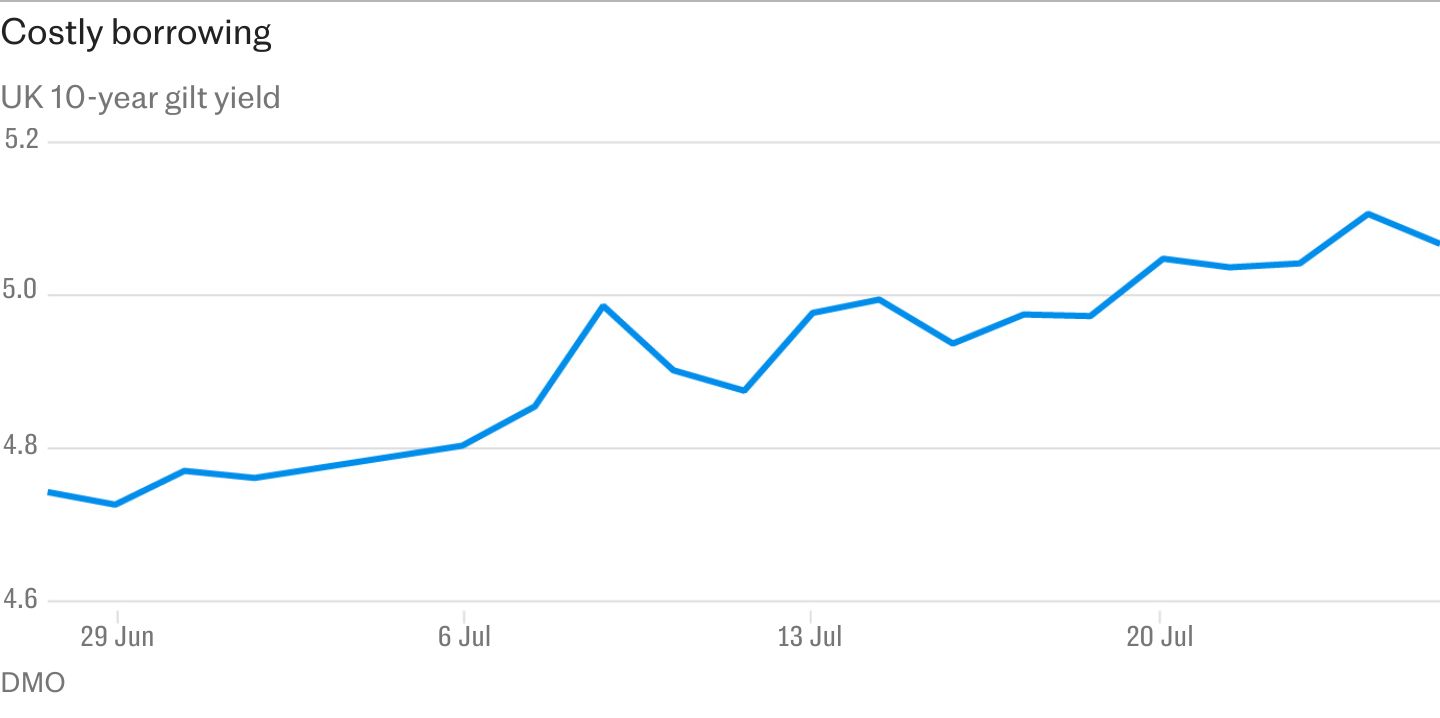
The 10-year gilt yield rose decisively above 5pc last week, spending sustained periods above 5.1pc – raising expectations of an even more punishing debt service bill. Government borrowing costs are higher than at any point since 2007, but the difference is that back then the national debt pile was around 60pc of GDP, now it’s almost 100pc.
Advertisement
That’s why the debt service bill was no less than £109bn last year – more than the state spends on education, the third-largest expenditure item on the Government’s balance sheet after the NHS and welfare – and is heading for £140bn by 2030, according to the Office for Budget Responsibility. No less than 80pc of what the state is borrowing is being spent on paying interest on previously issued debt.
This is a house of cards, which could easily be upended if inflation balloons, with Britain’s increasingly perplexed international creditors demanding even higher yields when lending to compensate for future price pressures. That decisive inflation surge could stem from oil spending consistently weeks above $100 – which is why, for Britain at least, the speedy resolution of this US-Iran war is about so much more than petrol prices and the broader cost of living, vital as those issues are.
So how high could oil go? The reality is that the Strait of Hormuz, despite countless claims to the contrary, remains almost entirely paralysed. On top of that, the “emergency” East-West pipeline across Saudi Arabia to Yanbu on the coast of the Red Sea is now also being targeted by Yemeni Houthis allied to Tehran.
Before Trump attacked Iran in early February, Yanbu handled around a fifth of Saudi’s oil exports. That share has risen to almost four-fifths, given the turmoil surrounding Hormuz. Having played a vital role in stabilising global markets since this conflict began in earnest, and with Houthis now targeting tankers in the Bab el-Mandeb Strait at the Red Sea’s southern mouth, fears are rising that oil markets could soon get even more fraught.
Last week, Kazakhstan suspended oil flows via the Caspian Pipeline Consortium, which shifts around 80pc of Central Asia’s oil to Western markets, following Ukrainian drone attacks. US strategic petroleum reserves are at a 43-year low.
After Yemeni Houthis declared a maritime embargo against Yanbu, Riyadh was rhetorically dismissive. But the Saudis then announced last week that three oil-exporting super tankers bound for China and India via Bab al-Mandab, the Gulf of Aden and eventually into the Arabian Sea and the Indian Ocean, would in fact instead head north through the Suez Canal, taking a lengthy diversion through the Mediterranean and around the Horn of Africa. This more than doubles – from 20 to potentially 50 days – the journey time for Saudi oil from the Gulf to the ever-hungry markets of Asia, while adding vast expense.
That’s a major reason – with no end in sight to this US-Iran conflict – some oil traders are now targeting $120 a barrel over the coming weeks.
There may be, of course, a sudden reversal. The US president could, with a single social media post, “turn the war off” by capitulating to Iran. There is a view in the markets that, with prices rising, as and when this war ends, we could end up with a glut as oil rushes out of the Gulf and floods global markets, sending prices back below $50.
This sounds like wishful thinking – stock-broker-driven guff, to keep share prices up and commissions rolling in. To my mind, global oil prices will be going a lot higher before they go significantly lower.
Source: “AOL Money”
