


Celebrities paid for perfect teeth. Why does everyone hate them?
Celebrities paid for perfect teeth. Why does everyone hate them?

Kerry JustichThu, November 5, 2026 at 12:00 PM UTC
6
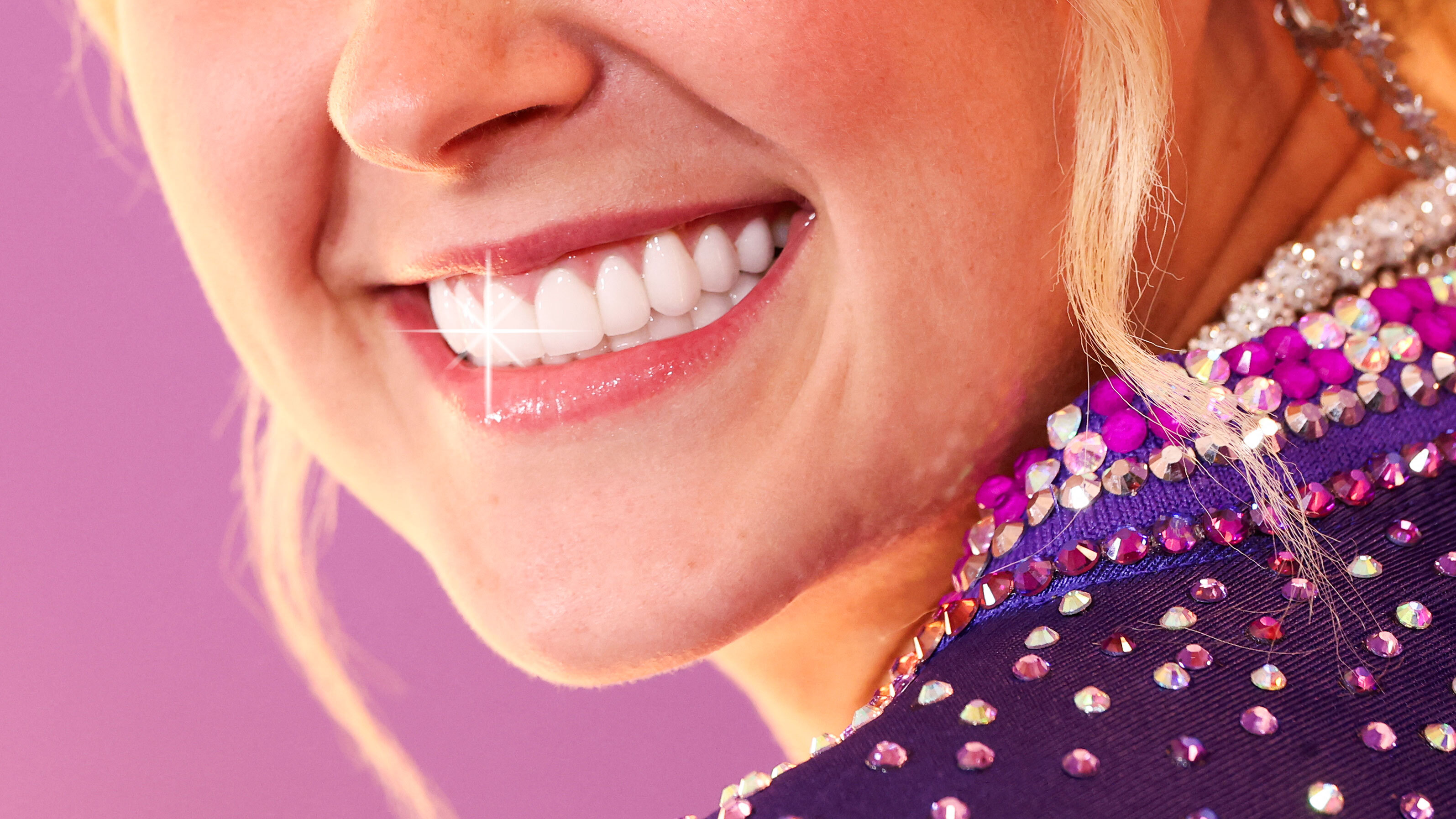
JoJo Siwa's were called "terrifying." Jackson Olson's were so bright that some Dancing With the Stars viewers said they were driven to distraction. Miley Cyrus's were called the "horsiest" set a commenter had ever seen. Some fans say they long for Taylor Swift's original.
The issue at hand: veneers.
Online, some pop culture obsessives (and dentists) have made a blood sport of critiquing celebrity teeth. A few decades ago, it was having crooked or yellowing teeth that was considered a badge of shame. Now, the problem is with smiles that are too uniform, too gleaming, too perfect.
The discussion around Olson's teeth got so loud during his recent run on Dancing With the Stars that he had to take to TikTok to address the issue. The Savannah Bananas player had just made his September debut, introducing himself to a massive new audience. Before they voted for him, many wanted to know: What was going on with his teeth?
"I've been getting a lot of questions… No, they're not real," he said. "They're veneers, all of them."
Olson's response went beyond confirming dental work. He described a baseball injury that resulted in a broken jaw and shifted teeth, which ultimately led him to get porcelain veneers.
And therein lies yet another double bind when it comes to navigating standards around appearance in 2026: We're encouraged to straighten our teeth, whiten them and fix their flaws. But make them look too perfect and there's something wrong with that too. Somewhere between the pressure to have a better smile and the demand to leave a perfectly good one alone, it becomes difficult to know what anyone's teeth are supposed to look like.
If both natural teeth and the work done to "fix" them invite scrutiny, is there any way to have a smile people won't judge?
Why are teeth judged so harshly?
A smile is often the first thing people notice, and we often make assumptions about the person behind it.
Marita Inglehart, a professor of dentistry and adjunct professor of psychology at the University of Michigan, has studied how much people think they can tell about someone just by looking at their teeth. In one study she co-authored, adults evaluated photographs manipulated to show different tooth and bite arrangements. Those changes affected how attractive and intelligent participants thought the people pictured were, along with their assessments of personality.
"The only thing changed in these pictures were the teeth," Inglehart tells Yahoo. "The hair, the face, everything else was the same."
Like it or not, teeth make a huge first impression. So, "when people want corrections for their smile, they're onto something," Inglehart says.
Carlos Quiñonez, a dental public health specialist and vice dean and director of dentistry at Western University in Canada, says teeth also carry assumptions about money, social status and perceived self-care. A stranger sees crooked or stained teeth and may read a whole backstory into them: hard times, limited resources, poor habits.
A straight smile, meanwhile, might be a tell that your family could afford braces. "Orthodontic treatment is not democratized," says Inglehart. "People still have to pay for it."
So the pressure to improve your teeth isn't entirely coming from a place of vanity. It can also come from knowing how other people might treat you if you don't.
"People do that because they want to belong," Quiñonez tells Yahoo. "They want to aspire to something, and I personally don't take that lightly."
Advertisement
Fix them. Just don't make them look fixed.
What counts as an attractive smile varies across cultures and social groups. But Hollywood helped make one version — straight, white, uniform teeth — most recognizable, says Quiñonez. And as social media brought those celebrity smiles even closer, so did the possibility of getting a perfect one yourself. You no longer had to be famous to aspire to famous-person teeth.
Dr. Natalie Pennington, a cosmetic and restorative dentist in San Antonio, sees those aspirations in her office as patients bring in celebrity reference photos and even pictures of influencers. At one point, it was Julia Roberts’s smile that they wanted. Now, they ask for Margot Robbie's, right down to her slightly pointed canines.
"There definitely is a trend," Pennington tells Yahoo.
There's no one-smile-fits-all approach to dentistry, Pennington explains, and she often tells patients that the same teeth may look different with their own face shape and lips.
Lately, patients have another request: wanting the brightness without the "keyboard, very staccato Chiclet look," she says. "Higher-end cosmetic dentistry is definitely tailored toward making it look more effortless and more natural."
That's a fairly specific assignment: Improve the teeth, preserve the individuality and make the improvement difficult to detect.
The ideal smile keeps changing
Quiñonez sees the criticism of obvious veneers as a reflection of shifting ideas about what a good smile should look like. The bright white look that once signaled success can come off as excessive as the preference leans toward something more subtle.
"I think ultimately it's a change in taste, a change in culture, a change in what we value at least aesthetically," he says.
When Aimee Lou Wood was starring in the third season of The White Lotus last year, many fans expressed enthusiasm for her natural smile, overbite and all. Her teeth became a celebrated departure from Hollywood uniformity, inspiring headlines about how refreshing it was to see someone who hadn't traded in her distinctive smile. But that same feature also made her a punchline on Saturday Night Live — a reminder that teeth are divisive.
The teeth someone once aspired to can become the ones someone else calls tacky. And dental work isn't something to swap out whenever the mood changes. Veneers are costly — Siwa said she spent $50,000 on hers — and irreversible because they require removing natural enamel to bond custom-made shells to the front of the teeth. "Once you cut a tooth, it ain't growing back," says Quiñonez, even if a person experiences veneer regret.
Whose smile is it, anyway?
Natural teeth are subject to suggestions for improvement, while dental work invites accusations of artificiality. Both allow strangers to weigh in on a decision that may involve health, money, years of insecurity or simply personal preference.
For the person deciding what to do with their teeth, the expectations can be difficult to follow. Pennington hears from patients who feel guarded in social situations, conscious of their teeth when they meet someone or see themselves on Zoom.
"They may not smile as big or be as expressive because they subconsciously feel they're not looking their best," she says.
Olson had a baseball injury to explain his veneers. But what if, like Siwa, he'd simply wanted a different smile?
Quiñonez points out that health and appearance frequently overlap in dentistry. Treating a damaged or decayed tooth can involve decisions about how the repaired tooth will look. The distinction between necessary treatment and aesthetic work isn't always neat.
Even when it is, he questions why the motivation matters to anyone else. "Why is one better than the other?" he asks.
Source: “AOL Entertainment”
