


Florida proved again it isn’t like the rest of America, yet change brewed | Column
Florida proved again it isn’t like the rest of America, yet change brewed | Column
8
Share

Scott Maxwell Thu, November 5, 2026 at 3:01 PM UTC
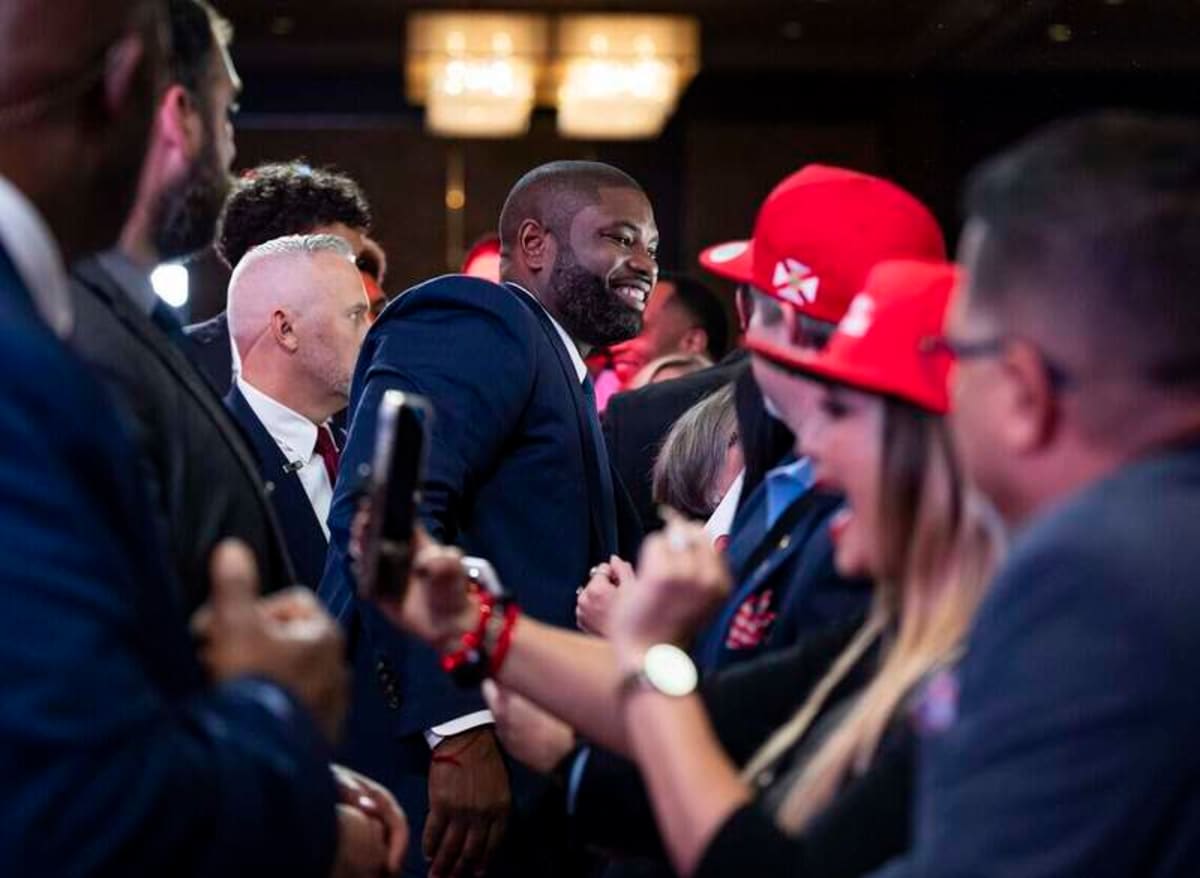
Republicans won all five statewide races, including Byron Donalds, who beat David Jolly in the gubernatorial contest. ©Photo by Matias J. Ocner
A blue tsunami washed over America Tuesday. Yet Florida Republicans found just enough sandbags to safeguard their power in a state that now looks more like a political island than a peninsula.

Scott Maxwell
The sandbags came in the form of a massive campaign-cash advantage and heavily padded voter-registration leads. Thanks to both, Republicans were able to eke out 51-49 wins.
The results reflected a serious underperformance. Republicans have 37% more registered voters in this state. So this was like a photo-finish victory in a 100-yard dash where one competitor had a 37-yard head start.
Still, the Republicans’ across-the-board victories in statewide races were enough to ensure the party still has total dominance here.
Most of America sent a clear message that it wanted checks and balances, Florida voters said: Nah, we’re good.
Most of America — even ruby red Texas— looked at the costs of living, the price of war and frequent cringe-inducing stories and said: We’ve bottomed out. Florida said: We’re not done digging.
Basically, Florida decided to keep on Florida-ing.
That was the statewide story anyway. Locally, Central Florida rode and embraced the blue wave, which drowned the aspirations of virtually any candidate who had an “R” next to their name in Orange, Osceola or Seminole counties.
Every single Republican candidate for the Legislature lost in Orange, Seminole and Osceola. That’s part of why Tallahassee Republicans frequently target Central Florida. It’s one of the few parts of the state they can’t control.
The bottom line: Florida is not like the rest of America. Also, though, Central Florida is not like the rest of the state.
One interesting thing about the statewide results is that there was absolutely no nuance. Every Republican won by the same skin-of-their-teeth margin — 50 or 51%.
Many insiders had confidently predicted that Moody would trounce Nixon in the U.S. Senate race, even if guys like Attorney General James Uthmeier or CFO Blaise Ingoglia struggled to hang on. Nope. All three got 51%.
Florida voters didn’t distinguish between Cabinet members who stoked division and were steeped in controversy and those who avoided both. Uthmeier and Ingoglia both fetched the same 51% earned by low-key Agriculture Commissioner Wilton Simpson, who largely keeps his head down.
Advertisement
It was like the candidates themselves didn’t matter in the statewide races. Most Floridians just chose a party line and stuck with it.
Fortunately for the Republicans, they’d stocked the voter pond in recent years. Older conservatives have moved to Florida while young, liberal and independent-minded people have fled the state for better-paying jobs and fewer culture wars.
That migration pattern might be cruddy for building an economy, which is why groups like the Florida Chamber of Commerce are so concerned about the state’s economic future. But it’s good for padding a voter lead.
There’s actually an argument to be made that Florida’s migration patterns helped turn the rest of the country blue. Every conservative voter that moved to Florida, after all, was one less who could cast a ballot elsewhere. And every dollar spent getting Republicans across the finish line in Florida was one less dollar that could be spent in states like Ohio, Texas, Georgia and North Carolina, all of which turned blue.
Gov. Ron DeSantis seemed to appreciate Florida’s new status as a lone red island in a Tuesday night Tweet that said: “With the loss of governors’ races in Texas, Ohio and Georgia, there will be only one state of the top ten most populous states with a Republican governor: Florida.”
Democrats nationally rejoiced with Pete Buttigieg, a potential Democratic contender for the White House, saying: “Tonight proves it: there is no such thing as a permanently red seat.”
Maybe. But it remains to be seen if Florida is a permanently red state. Basically, did Tuesday’s results, where Republicans barely hung onto power, prove that this state will remain defiantly red, no matter what? Or was the party’s underperformance a sign of things to come in the Sunshine State?
If there is change brewing, it will likely continue percolating from Central Florida.
A question moving forward is how Florida Republicans respond.
On one hand, they still have total control and can act without much fear of any branch — executive, legislative or judicial — providing a check or balance on the other.
On the other, they no longer have the security of knowing they’re assured comfortable victories, regardless of what they do. DeSantis won his 2022 election by 19 points. Byron Donalds won Tuesday’s by 1. And presumably, Donalds wants to get re-elected.
Florida’s new governor-elect seemed to signify a more conciliatory tone Tuesday night than anything the current governor has offered in recent years with Donalds saying: “Even if you didn’t vote for me, you have my word that I will be your governor, too.”
We’ll see. Actions matter more than words. And for the last eight years, the leaders of this state have leaned into actions that stoked division. But the divide in Florida doesn’t look as wide as it did before Tuesday.
Source: “AOL Breaking”
