


I'm a projectionist - I don't just 'press play'
I'm a projectionist - I don't just 'press play'

Sarah Turnnidge - Bristol Sun, July 26, 2026 at 6:17 AM UTC
0

Patrick Welsh, Watershed's youngest projectionist, said he worked 'a bit of a silly job'
At the heart of one of Bristol's busiest cinemas lies a room that has changed very little since it was built in the early 1980s.
Most film-goers' only sight of the projection room is the beam of light stretching out onto the screen. But tucked away behind the glass window is a sprawling room filled with decades-worth of projectors, cardboard boxes filled with reels of film and the team that meticulously maintains and runs each and every movie.
"The classic thing people ask is 'do you just press play?'" said projectionist Patrick Welsh. At just 25, he is the youngest projectionist at the Watershed cinema and one of a rapidly dwindling number of people being trained to keep the art of 35mm cinema alive.
"To be learning these skills, and hopefully at some point showing other people how to do them, is really nice because it means such an old form of art really gets to carry on," he explained.
More from Bristol
-
Man 'fighting for life' after screwdriver stabbing
In Pictures: Balloons, festivals and flower shows
'I know she's AI, but to me she's a friend'
With a background in music production, Welsh started out at the Watershed as a front of house usher before getting more involved in running the sound for live events. Eventually, after - in his own words - "begging" for more experience, he started to learn the ropes of projecting 35mm film.
Until the dawn of digital cinema in the early 2000's, 35mm - still the standard method for shooting film - was used in screens worldwide. Thousands of reels of film passed between cinemas week after week, with highly-trained projectionists at each screen physically cutting, loading and playing every film live for the audience.
Ewan Dunford, 47, became a projectionist during this era. Starting out at a multiplex, he has worked at the Watershed since 1998 and for the past year or so has been passing on his knowledge to Welsh.

Dunford said it was "amazing" to have the opportunity to train a new generation of projectionists
"Back then, the training was pretty much constant," Dunford said. "You had more of an opportunity working on 35mm - each cinema would be running six times a day with 14 screens, so that's actually quite a lot of practice every single day and you'd be handling film all the time."
But with the vast majority of films now shown digitally, the number of people being trained up to show 35mm film has dropped significantly. When Oppenheimer came out three years ago, Welsh said, they were bringing projectionists out of retirement to keep up with demand.
So, what is it like to train as a projectionist when all you have ever really known is digital?
"It's quite a rigorous thing," Welsh said, adding that Dunford was "quite wary" at the start when showing him how to handle the delicate film.
"It's quite a rigorous thing and you have to do lots of training before you can even start running it," Welsh said. "If anything goes wrong you can tear it to shreds basically, and the last thing you want to do is damage the film.
Advertisement
"It's really about memory - almost like playing a musical instrument or threading a sewing machine."
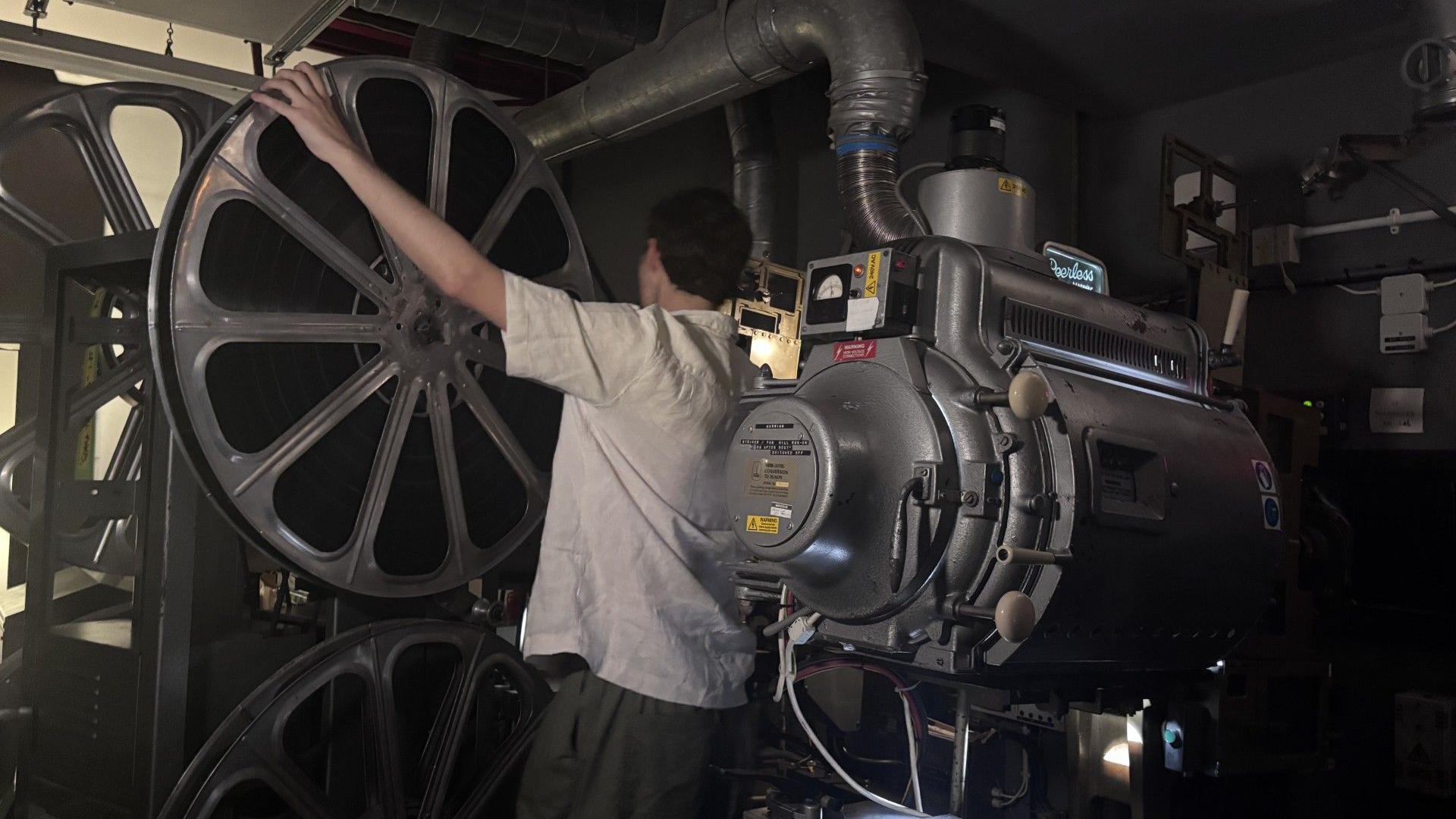
Each roll of delicate film can be more than two miles long
"One of the most important things about 35mm is patience," said Dunford. "You need to take yourself out of the digital world into the 35mm world, to take your time and have patience and understanding."
Appreciation of that time and effort, both said, was behind a growing audience who are interested in seeing 35mm cinema. In an era when vinyl records and and film photography are seen as increasingly desirable - especially among younger people - the physicality of 35mm film has seen something of a renaissance.
"With me and a lot of the younger generation, it's really nice to have something so tactile," said Welsh.
"I think people have realised how much value these sort of things have. For me, the best thing about film, being an audience member or a projectionist, is you actually have a real relationship.
"If you're watching it, you know there's someone out there. They have got the film delivered, they've inspected the film... and they are literally upstairs projecting it to you.
"It makes the relationship between the audience and the projectionist, and also the projectionist and the film, quite strong. It feels almost like a live performance, which makes watching a film much more exciting."
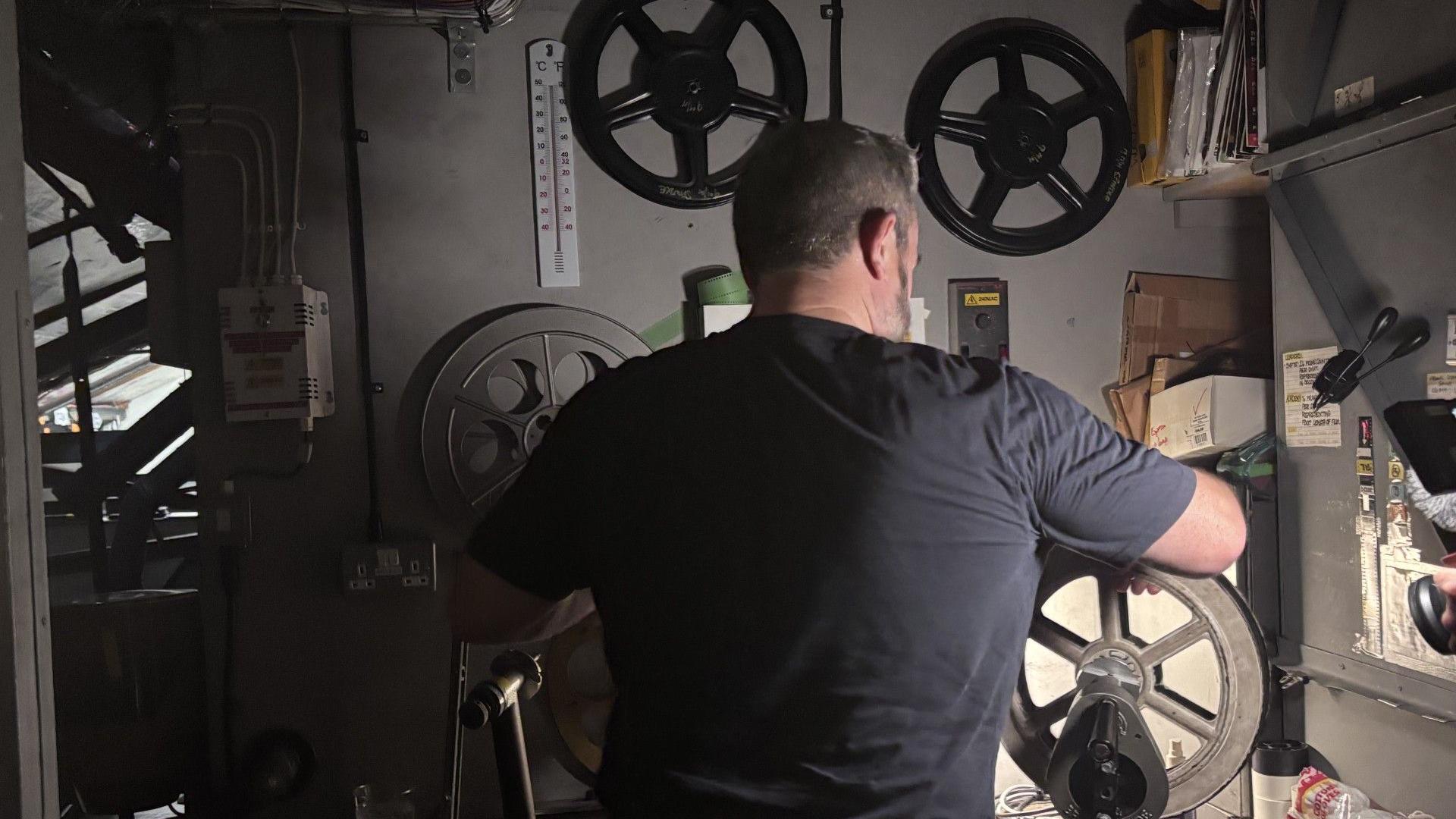
While it has seen modern upgrades throughout the years, the projection room at the cinema has remained largely unchanged for decades
While it had been a "struggle" to find time to train staff, Dunford said, working with people like Welsh who have "a real passion" for the format has made the process much easier and it had been "amazing" to pass the skill on to a new generation.
Nowadays, the Watershed is the only cinema in the city regularly showing 35mm film, and many assume the art has long since died out. Along with the recent release of the Odyssey, shown in select cinemas on 35mm, the Watershed is also showcasing a number of other films in the format in July.
With that in mind, Welsh said, he has had some unusual reactions to his line of work.
"When I tell people I'm a projectionist, it's almost like quite a lot of shocked faces because you don't think that's a job anymore," he said.
"It's just a silly job really, isn't it? Being a projectionist in 2026, that's funny."
Follow BBC Bristol on Facebook, X and Instagram. Send your story ideas to us on email or via WhatsApp on 0800 313 4630.
-
The Odyssey film fans inspired to go back to the source
Christopher Nolan on the importance of young people for cinema
Filmmaker unearths legend of buried Star Wars toys
Related internet links
-
Watershed

Source: “AOL Entertainment”
