


Job Openings Are Rising, but Hiring Is the Slowest Since 2013. But How?
Job Openings Are Rising, but Hiring Is the Slowest Since 2013. But How?

Omor Ibne EhsanWed, November 4, 2026 at 6:08 PM UTC
0
24/7 Wall St. (24/7 Wall St.)Quick Read -
September openings beat estimates at 7.5 million, but SPY fell 1.98% over the week as hiring hit its slowest annual pace since 2013.
The Fed's 4.00% rate is "making it more expensive for employers to turn those plans into hires," Stahle said, as payrolls added just 29,000.
Building a portfolio and living off one are two completely different skills, and almost nobody teaches the second. This problem is what The Definitive Guide to Retirement Income helps, and it is free today. Read more here. (Sponsor)
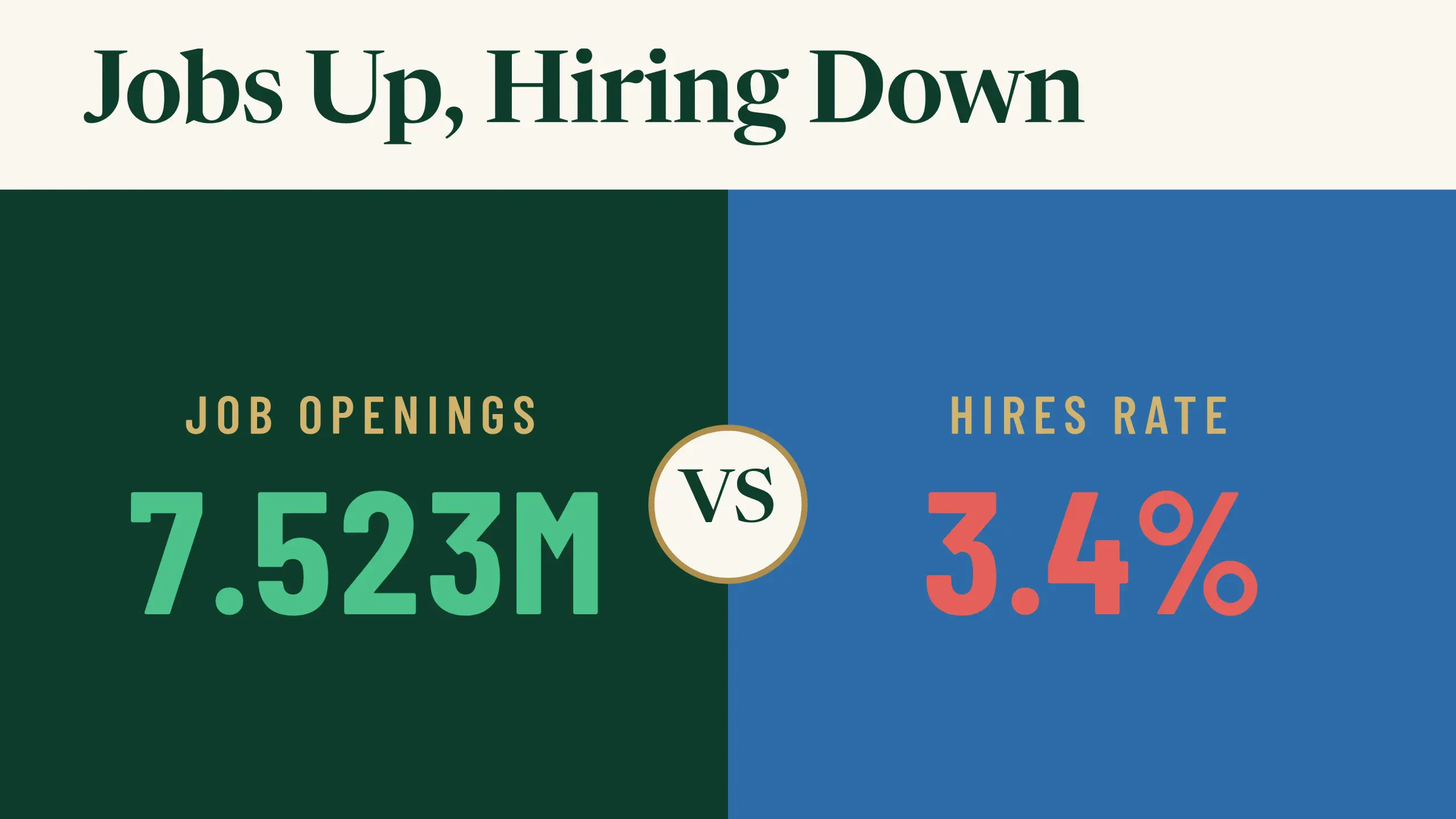
Employers listed 7.523 million open jobs in September, the Bureau of Labor Statistics reported on November 3, 2026. That beat the consensus estimate of 7.10 million.
The same release put the hiring rate at 3.4%.
Cory Stahle of Indeed Hiring Lab called his analysis "Eerily Quiet." He wrote, "Employers are hiring at the slowest pace since 2013, and workers are quitting at the slowest pace since 2015," adding, "Stability can have its advantages, but quiet isn't the same as healthy."
That stress matters if you own the SPDR S&P 500 ETF Trust (NYSEARCA:SPY). When few people are laid off, paychecks keep going into corporate revenue, but when few people are hired, the economy has little room to grow.
SPY rose 0.31% to $754.44 on November 3, although it was still down 1.98% over the past week.
Openings Beat Forecasts, but BLS Called Them Little Changed
Openings rose 333,000 to their highest level since May, and the openings rate reached 4.5%. August was also revised up to 7.19 million.
Even so, BLS called openings "little changed," which means the increase was not statistically significant. April's level of 7.585 million was higher than September's.
BLS said hires "changed little," but they rose 131,000 to 5.402 million. The hires rate beat July and August and has stayed between 3.1% and 3.5% all year.
The "slowest since 2013" label describes an average pace over a full year. Over the past 12 months, the hiring rate averaged 3.31%, below 2013's 3.37% and the same as 2012's.
Now Available: The Definitive Guide to Retirement Income
Many successful investors eventually reach the same moment. The saving is done, the portfolio is built, and the question quietly changes from how much can I grow this to how much can I take out? Get that second question wrong and decades of good investing can come apart in a handful of years.
That is exactly what The Definitive Guide to Retirement Income helps answer. It covers what your retirement could actually cost, which income sources are worth using, and the withdrawal math that decides whether the money lasts. It is free today from Fisher Investments. Read More Here ›
How Open Jobs and Slow Hiring Coexist
Openings count "all positions that are open on the last business day of the month," while hires are added up across the whole month. A job can stay posted for weeks without anyone filling it.
Advertisement
In September, openings topped hires by about 2.12 million. That works out to about 0.72 hires per opening.
Professional and business services openings rose 106,000 while hires in that sector fell 30,000. Manufacturing showed the same split.
Accommodation and food services hires rose 158,000, more than the entire increase in total hires. One month of industry data is noisy, though.
Low Layoffs Keep Workers in Place
Layoffs fell to 1.641 million, the lowest since March 2025, although August was revised up by 127,000.
Quits rose to 3.4 million, with food service quits up 197,000. The 2.1% quits rate was the first reading above 2% since June 2025.
In this low-hire, low-fire market, Stahle wrote, many workers are "stuck, too," with "paychecks trailing inflation and little leverage to push for a raise or jump to a better offer."
Rate Hike and Rising Yields Cap the Upside
Online job listings recently showed their first year-over-year gain in more than four years. But the Federal Reserve raised the top of its target range to 4.00% in September, which Stahle said is "making it more expensive for employers to turn those plans into hires."
Employers added just 29,000 jobs in September. Unemployment at 4.2% and weekly jobless claims of 194,000 show that slow hiring is the drag while layoffs remain low.
The ten-year Treasury yield reached 4.96%. That was as of 4:09 p.m. EST on November 3.
What the Jobs Data Means for SPY Investors
The labor data is positive for SPY. Steady employment, layoffs near their lows, and openings above estimates all support the consumer spending that drives S&P 500 earnings.
Against that, the rate hike and rising yields pressure valuations, and weak job growth adds to the strain, and a VIX reading of 21.15 shows options traders already expect more volatility.
The next tests are Friday's October employment figures, November 6, at 8:30 a.m. ET, and October JOLTS on Tuesday, December 1, at 10 a.m. ET. If layoffs climb back above August's revised 1.768 million, the positive labor background for SPY would weaken considerably.
Released: The Definitive Guide to Retirement Income
(Sponsor) Most people spend their entire working lives focusing on one thing: growing a pile of money. Then they retire and discover the skill they actually need is close to the opposite. Turning that pile into steady income, year after year, through good markets and bad, without ever running out.
It may be the least discussed and most consequential transition in personal finance, and plenty of otherwise careful investors walk into it with no real plan. That is exactly what The Definitive Guide to Retirement Income helps answer. It is a free guide from Fisher Investments covering what your retirement will really cost, where the cash flow should come from, and how much you can safely withdraw each year. Learn more here. Learn More Here ›
Contact editorial@247wallst.com for any questions or corrections.
Source: “AOL Money”
