


Morgan Stanley resets Microsoft stock forecast ahead of earnings
Morgan Stanley resets Microsoft stock forecast ahead of earnings

Vuk ZdinjakSun, July 26, 2026 at 2:17 AM UTC
0
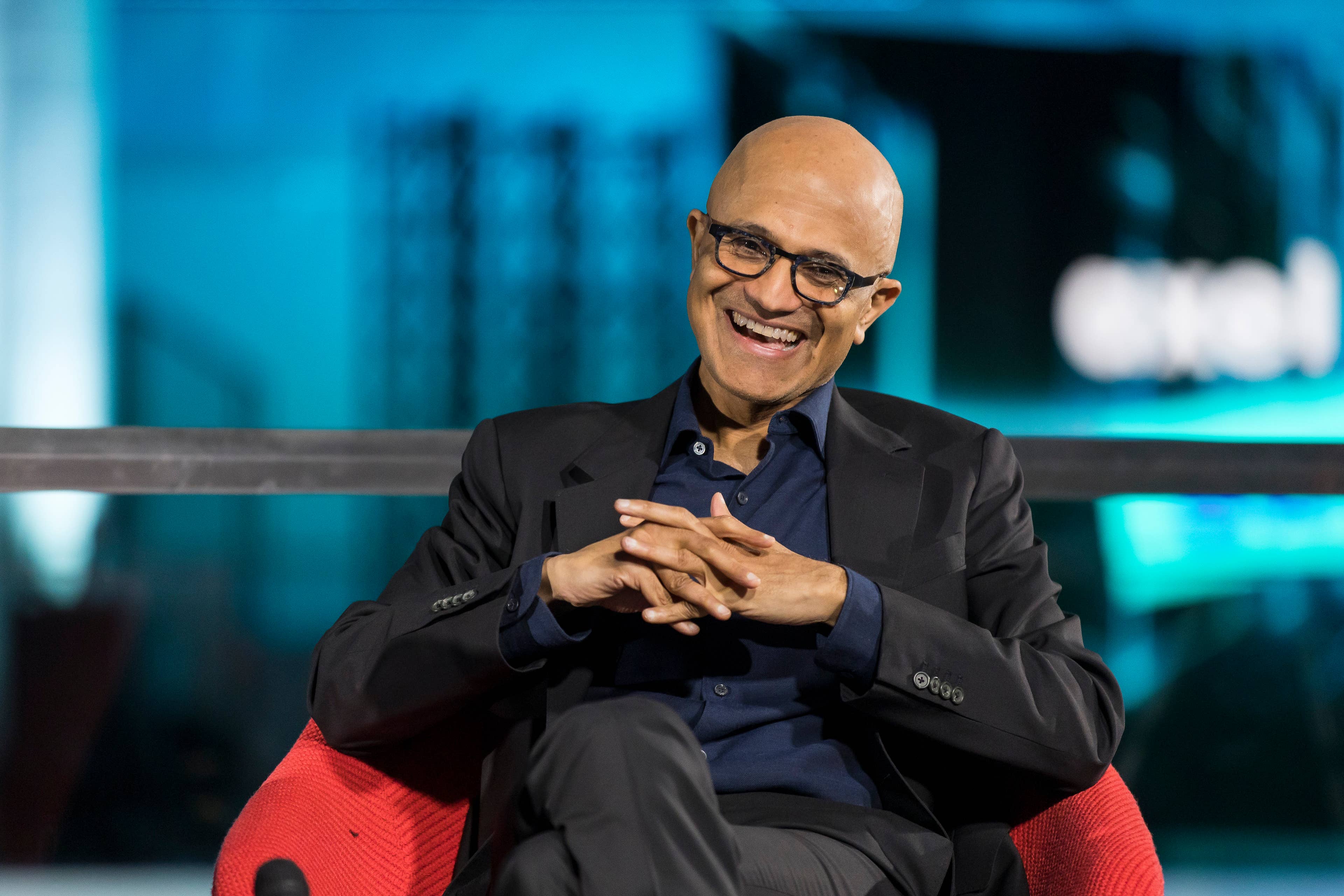
Morgan Stanley believes the Q4 report will be a positive catalyst for MSFT stock.Shutterstock
The earnings season has kicked off with a bang, though not the kind that investors have been hoping for. Two Magnificent 7 members turned in their disappointing earnings on the same day.
Alphabet (GOOGL) and Tesla (TSLA) both reported earnings on July 22, and both stocks dropped the following day. Microsoft (MSFT) and Meta (META) are next in line to report earnings on July 29.
The theme for the year has already been set, when all the hyperscalers increased their capital expenditures (capex) plans as if spending more guarantees winning the AI race.
The trade-off is that this serious cash burn will negatively affect free cash flow. The only Magnificent 7 members that won’t have this problem are Apple (AAPL) and Nvidia (NVDA).
Despite this elephant in the room, Morgan Stanley is still bullish on Microsoft. In a research note shared with me, Morgan Stanley analysts Adam Wood and Josh Baer their opinion on Microsoft stock ahead of the fourth quarter (Q4) earnings.
Morgan Stanley believes the Q4 report will be a positive catalyst for MSFT stock
Analysts said that Azure and Copilot are key drivers for the stock, and they believe that the sentiment about them is about to improve.
They see approaching Q4 results as the first catalyst that will support their thesis.
They noted that Q3 was strong and that Microsoft exceeded consensus estimates across all three segments, delivering approximately 1% total revenue upside, driven by 39% constant-currency Azure growth.
Analysts believe that Azure growth will continue into fiscal year 2027, as Microsoft continues with its plan to approximately double its total datacenter footprint over the next two years.
Wood wrote: “We believe this expanding infrastructure footprint should continue easing capacity constraints, allowing Azure to capture robust AI and cloud demand while providing further evidence that Microsoft’s significant AI infrastructure investments are translating into durable revenue growth.”
Analysts expect Azure AI to achieve approximately 100% year-over-year growth in Q4 fiscal year 2026, or 18% quarter-over-quarter growth.
They noted that Microsoft’s management has said that a significant portion of capex is for longer duration assets like land and buildings, which could generate revenue for more than 15 years.
Wood reiterated an overweight rating for Microsoft stock, and a price target of $600, based on a 25x multiple and EPS estimates for fiscal year 2028.
He noted that this multiple represents a premium to large-cap software peers, but he believes it is justified by strong positioning and execution.
Analysts noted downside risks: -
Weak macro impacting IT spending
On-premises cannibalization by Cloud
Increased investments hurt margin expansion
AI adoption proves limited
Upside potential: -
Cloud adoption accelerates, with Azure as convincing winner
AI leadership results in substantial revenue contribution over-time
Operational efficiencies leading to greater than anticipated economies of scale and margin expansion
While Morgan Stanley believes that high capex will work in Microsoft’s favor, investors need to watch carefully what happens to OpenAI, as it is a major driver of that capex.
Microsoft’s $100 billion friendship with OpenAI is showing cracks
Microsoft revised its partnership with OpenAI in April, stating that it no longer has an exclusive license for its models.
It was also absent from the last OpenAI funding round.
This news sounds a bit different when taken along with the amount of money Microsoft spent on OpenAI. We can thank Elon Musk’s lawsuit against OpenAI for this important information.
Advertisement
Michael Wetter, who runs the company’s corporate development, testified in court that the company has spent more than $100 billion on its OpenAI investments and its costs of building data centers and hosting, according to Reuters.
After spending so much money on OpenAI, it is hard to break out, and Microsoft keeps making one step forward and one step back, as we can see from what is going on with the Copilot front.
Microsoft made major leadership changes to improve its AI strategy, with the most important being the naming of Jacob Andreou as EVP for Copilot.
The company launched Copilot Cowork in March for Frontier (early access program), and it became generally available in June.
The most recent effort was the launch of MAI-Image-2.5-Pro and MAI-Voice-2-Flash AI models, which reduce GPU usage significantly.
Despite these serious efforts, OpenAI’s GPT‑5.6 is the preferred model in Microsoft 365 Copilot.
Not only is Microsoft competing with its partner on the model front, but it has already built and is building additional data center capacity, driven by OpenAI’s insatiable demand.
The problem is that OpenAI’s leaked financials show it is not profitable.
Tech writer and prominent AI skeptic Ed Zitron published leaked OpenAI’s audited financial statements, which were verified by the Financial Times. This revealed an increase in OpenAI’s net loss, from $5.09 billion in 2024 to $38.53 billion in 2025.
OpenAI’s way to get more investor money was to pursue an IPO, but this IPO is now in question.
On July 10, Apple filed a lawsuit in a federal court in Northern California, alleging trade secret theft by former employees and OpenAI.
Related: AI agents can now open bank accounts and move your money
The lawsuit could be trouble for the IPO, but OpenAI was already considering postponing it until 2027, even before the lawsuit, The New York Times reported.
As if the era of tokenmaxxing ending, and OpenAI having problems, wasn’t enough, Kimi K3’s release only made things worse for frontier model developers.
The issue here is the one that Alex Karp, Palantir (PLTR) CEO, raised, that companies are starting to realize they need more control over the models and to have security of their data. This is how these open-weight models might lead them to invest in their own infrastructure.
If we add to the picture Meta entering the cloud business, which will also sell AI capacity, Microsoft could end up with excess capacity.
In conclusion, Microsoft’s capex might look good for Morgan Stanley analysts, but one domino falling could unravel it all.
Related: Microsoft CEO’s Anthropic criticism reveals bigger AI power struggle
This story was originally published by TheStreet on Jul 26, 2026, where it first appeared in the Investing section. Add TheStreet as a Preferred Source by clicking here.
Source: “AOL Money”
