


Wall Street takes a beating with markets and tech stocks tumbling amid AI concerns
Wall Street takes a beating with markets and tech stocks tumbling amid AI concerns

Stan Choe Thu, November 5, 2026 at 9:11 PM UTC
0

Shares linked to AI data center construction led a steep downturn across Wall Street on Thursday as the S&P 500 fell 4.4%, marking its worst drop since President Donald Trump unsettled global markets in April 2025 with his "Liberation Day" tariffs.
The decline completely reversed the prior day's rally, which was the market's best in three months. The Dow Jones Industrial Average dropped more than 1,800 points, while the Nasdaq composite slid 5.5%. Worldwide, AI stocks faced heavy pressure amid mounting concerns over potential data center moratoriums following Democratic victories in the U.S. midterm elections.
The pullback reverberated across global equity markets, where major players linked to the AI surge faced renewed selling pressure. South Korea's Kospi index dropped 5.3%. For months, investors have weighed whether elevated borrowing costs will curb the substantial capital spending required for AI infrastructure, amid growing warnings that valuations had inflated into a bubble.
Political developments further exacerbated market anxiety following Tuesday’s U.S. midterm elections. Democratic victories nationwide sparked concerns over potential policy interventions or delays regarding data center construction. Polling indicates widespread public skepticism toward AI, along with voter frustration over rising electricity bills linked to energy-intensive facilities.
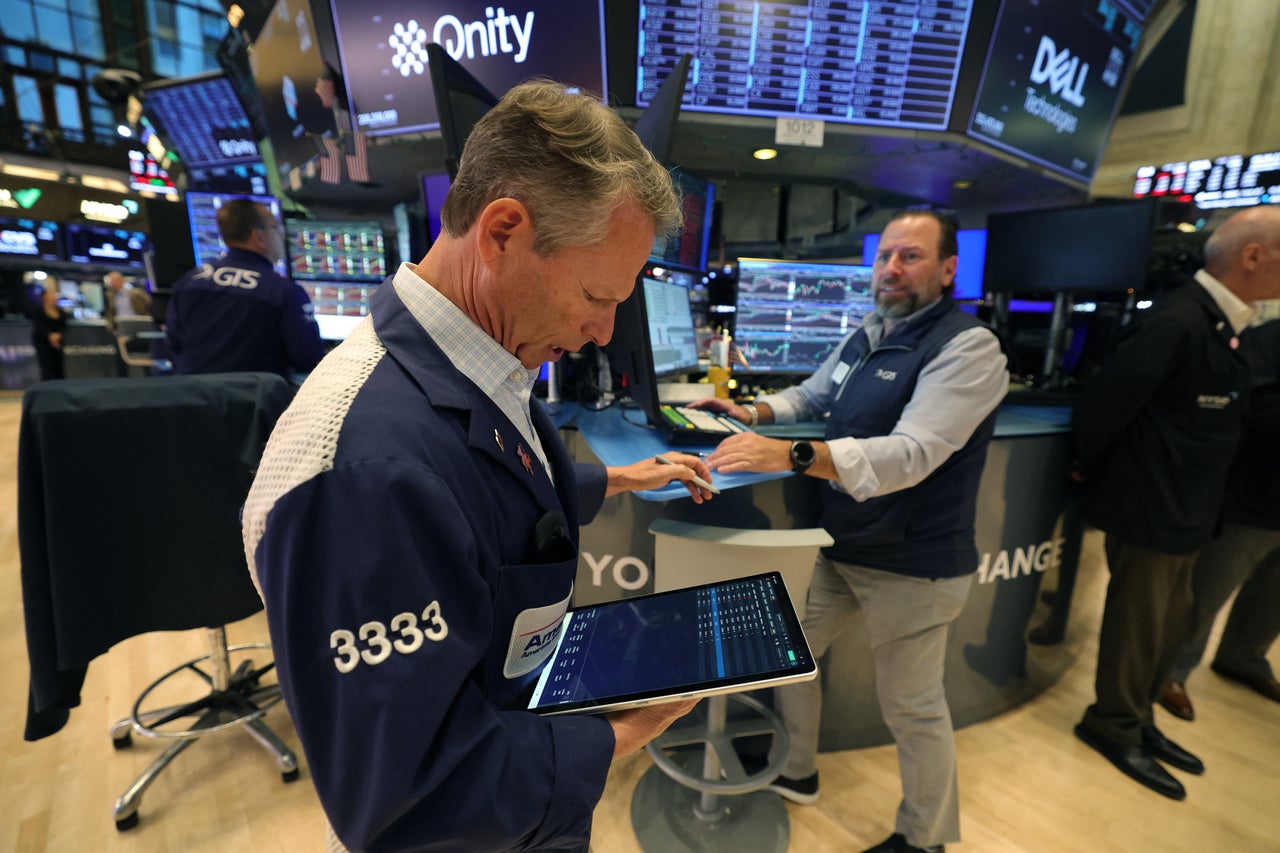
The Nasdaq, which is full of AI-related and other tech stocks, sank 11% below its all-time high set last month (AFP via Getty Images)
Any pause in data center development threatens to ripple through the broader economy, reducing demand for hardware like AI processors, power generation, and related service sectors that have served as primary drivers of U.S. growth.
Nvidia, a central beneficiary of the AI trade, plunged 8% to lead losses on the S&P 500, compounding a 3.2% decline from the day before.
Other sector participants followed suit. Advanced Micro Devices plummeted 14%, while cloud infrastructure firm CoreWeave slid 8.9%. Energy infrastructure supplier GE Vernova dropped 6.9%.
Because of their immense market capitalization, movements in major AI chipmakers disproportionately impact broad market benchmarks. A single percentage point shift in Nvidia’s stock price carries significantly more weight on the S&P 500 than an equivalent move in almost any other domestic listing.
The broader market weakness took hold after early morning gains faded rapidly across Wall Street.
Advertisement
Bucking the downward trend, AppLovin surged 29.4% after delivering quarterly revenue and profit figures that surpassed Wall Street estimates. The mobile marketing platform also expanded its share repurchase authorization by up to $3.2 billion, raising the program’s potential capacity to $3.6 billion.
Luxury retail parent Tapestry advanced 7.4% after the company behind the Coach and Kate Spade brands reported better-than-expected earnings and raised its full-year sales and profit forecasts.
Historically, equity valuations remain primarily tied to corporate earnings trajectories and broader monetary policy rather than shifts in political control in Washington.
In energy markets, crude prices stabilized following an initial post-election drop. Brent crude climbed 3.9% to $98.29 per barrel, reclaiming a portion of the nearly 9% drop recorded in the previous session as traders assessed the ongoing conflict involving Iran.
Fixed-income markets signaled a flight to safety as Treasury yields slid lower. The yield on the benchmark 10-year Treasury note decreased to 4.83% from 4.90% late Wednesday, down from 4.95% on election night and well below the 5.30% level recorded last month.
The retreat in bond yields occurred despite relatively resilient U.S. economic data. Weekly initial jobless claims fell, while a separate report showed third-quarter worker productivity surpassed forecasts—a factor that could support economic expansion without fanning inflation.
International stock indexes presented a mixed picture across Europe and Asia. Japan’s Nikkei 225 dropped 1.8%, weighed down by domestic technology listings.
In London, the FTSE 100 slipped 0.4% following a decision by the Bank of England to raise its main interest rate for the first time in three years to counter persistent inflationary pressures.
Central bank officials indicated future policy moves remain heavily contingent on energy price volatility stemming from the Middle East conflict.
"We’ve seen encouraging news in the past 48 hours," Bank Gov. Andrew Bailey said at a press briefing. "The best thing that can happen is to resolve the conflict in the Middle East; there’s no question about it."
Source: “AOL Money”
